Showing posts with label plastic. Show all posts

Sunday, 23 June 2019

Seal Rescue Ireland

A photo taken of Churro, a female grey seal
So for my summer I'm interning at Ireland's only seal sanctuary, Seal Rescue Ireland which I am really enjoying. I have already learnt so much about the two types of seal found within Irish waters. The first species of seal is the Grey seal. These guys can reach up to 300 KG and the pups, that are born between September and December, are born at roughly 14 KG. The pups are born with a white fur called lanugo which is not waterproof meaning they have to spend the first three weeks on shore with the mother coming to shore to nurse frequently. So if you see a small white seal on shore please keep a distance and phone a wildlife centre if you're worried because mum is more than likely close by. The second species of seal (that is much cuter in my opinion) is the Common seal which is a lot smaller only reaching 130 KG. They are currently in pupping season and are born during the summer months and are able to go straight into the water after they are born but we still advise that if you find one on the shore to follow the same rules as stated above.

So why do we need a rescue centre? Well there are several reasons that seals end up in our care the first of which being plastic ingestion. We have had numerous seals come into the centre with single use plastic within the system, especially shiny piece such as crisp packets that can look like fish. Most of the time the seal throws up the plastic but we have found it stuck in digestive systems which has resulted in the death of a few seals. One way we reduce our plastic is by making EcoBricks which are plastic bottles stuffed with soft plastic that is densely packed so no air is present. They are used in less developed rural areas as actual bricks but we use our to make benches for school tours. If you want to learn how to make them click here. Another major issue is orphaning of pups as they are similar to baby birds in the sense that if the mother does not recognise the scent of the pup or becomes scared she will abandon her pup and self preserve.  Dogs in particular scare seals and should be kept on leads if you are in areas where seals are found. Dogs and seals are also very closely related and and cause disease to spread quickly between them which will not only harm the seal but also put your dog at risk aswell. To prevent this we ask that you do not touch the seal. UNDER ANY CIRCUMSTANCES. We ask that you keep a distance and call a wildlife centre (or us) and you will be advised what to do. It is likely that the mamma seal is close by in the water so we will send volunteers to watch for roughly an hour to see if the mum can be spotted. If we cannot see her we will then take the seal pup in.

The purpose of SRI is to take in sick, injured or abandoned pups with the aim of releasing them back into the wild and we are more like a seal hospital than a zoo. The centre is run mainly on donations and only get 5% of the costs covered by the Irish government. This is enough to treat roughly six seals but on average we treat 150 seals annually. Each seal costs roughly 2000 Euros to treat as this covers medicine, employment, energy needed, and fish (lots of fish) so to raise money I am doing a run in July. I would appreciate any donations to help the seals below. Please check out the website below and read all the amazing things we do and if anyone is visiting County Wexford come visit and we would love you give you a tour. You can also adopt a seal here for 30 Euros where you get a pack of information and pictures of your pup with updates on how they are doing. 


Donate to my fundraiser to help the seals.
https://www.facebook.com/donate/640533469797106/

Seal Rescue Ireland website - http://www.sealrescueireland.org/


Thursday, 6 December 2018

The Impacts of Sailing

Sailing (sport) - Wikiwand
http://www.wikiwand.com/en/Sailing_(sport)

The boating and sailing industry has been growing over recent years with many of us participating as a way to connect with oceans and nature. This growth has aloud us to go scuba diving and snorkelling in areas that otherwise wouldn't be accessible as well as take part in a seemingly fun team sport with boat races even being included in the Olympics. However, with out oceans and the creature that call them home being in great danger, this got me thinking if this recreational activity could have a grave environmental impact.

In recent years there has been evidence to suggest that boats have caused a decline in dissolved oxygen, stunting the growth of sea plants that in turn affect the entire food chain. The propellers  and rudders bring up sediment from the sea bed which reduces the turbidity (i.e. it stops sunlight from reaching the seabed). This reduces the amount of photosynthesis that can occur and reduces the amount of oxygen available meaning that habitat cannot sustain larger fish populations, especially in shallow waters. With nutrients also being brought to the surface, large amounts of boats have also been linked to algal blooms which also reduce the turbidity but, in some cases, produce products that are toxic to both marine and terrestrial organisms. Safe to say that the reduced turbidity caused by high speed boats has a major impact on marine life and is something that can be easily avoided if we anchor these boats further out, away from shallow waters with less chance of the motors touching the sediment.

Another major impact is the potential for fuels to spill and leak into the surrounding environment. We have all seen those photos of sea birds drenched in oil and boats have the potential do do this on a much smaller scale, particularly if the boat is driven and managed poorly. When the boat is stationary, there is significant potential for small amount of partially burnt fuel to leak into the surrounding area. Smaller fuel particles are more likely to be ingested by marine life therefore there is great risk for bio accumulation up the food chain. Needless to say these chemicals are toxic to marine life. These chemical can also affect both the biotic and abiotic conditions of the habitat, making them less habitable for the species that live there. One potential change is pH and if it were to increase in acidity (or decline in pH) could mean damage to crustaceans with the acidic water dissolving shells and other carbonaceous structures including corals.

Although sailing can increase tourism and GDP, there is also the physical damage done to habitats. Sailing and other marine activities produce large amount of litter that end up in the ocean which included nets, ropes and plastic bags. With 43% of all boat activity being recreational sailing in Australia alone, it it fair to say that the majority of the waste from boats come from the sailing industry. Marine debris poses a huge threat to wildlife with organisms becoming trapped in discarded nets as well as smothering coral and other sea plants. Not to mention the fact that some organisms mistake plastic for food with sea turtles in particular mistaking plastic bags for jelly fish. The boats themselves have also done physical damage to marine environments with boat anchors being the biggest offender. Anchors can damage the sea bed but uprooting plants, disturbing bottom feeders and destroying coral.

The main solution to this would be to designate protection areas with no or limited access to areas with high biodiversity. However evidence suggests that this requires greater regulation with 43% of sailing boats in Australia ignoring the Marine Protection Areas. I'm not saying we should stop ailing as it is a way for us to grown closer to our marine environment and fall in love with the beautiful marine wildlife. I am however suggesting we act responsibly by staying within designated zones, ensure the boat is maintained to a high standard and stop treating the ocean as our personal landfill.

Resources -

Thursday, 2 August 2018

Is biodegradable plastic a thing and is it a solution?

Image result for biodegradable plastic
Photo from https://www.thenational.ae/lifestyle/can-plant-based-degradable-plastic-solve-the-problem-1.746423

With the recent series of Blue Planet highlighting the magnitude of plastic pollution in our oceans, the general public have taken a greater interest in reducing the plastic we use which is definitely not a bad thing considering the fact that annually eight million tonnes of plastic waste enters our oceans. We as a society are heavily dependant on plastics with even the most eco-friendly of households still throwing away a large amount of plastic. 300 million tonnes of plastic are made each year 10% of which is recycled and just over 40% of plastics only being used once before discarded. Needless to say I get very excited when I see supermarkets seeing biodegradable bin liners and cling film but are these truly environmentally friendly and a permanent solution to our plastic problem?

Firstly, there is a major difference between bioplastic and bio-degadable plastic. Bioplastic are made from completely renewable sources that are biologically based ranging from corn oil to starches. these mean these breakdown naturally in the environment and are 100% compostable as they only contain organic matter. Bio-degradable plastics are still chemical based and still include petroleum based chemicals but have additives that causes a quicker breakdown in the environment. The words photodegradable and oxydegradable are probably a better way to describe these types of plastics. Due to the chemical content, there can still be toxic residue produced meaning these plastics cannot compost as some of the chemical residue can inhibit plant growth, unlike the bioplastics. There have also been reports that bio-degradable plastics still produce micro plastics which are easily ingested by fish and plankton and bioaccumulate up the food chain. It has been reported that in the North Atlantic Ocean, 73% of fish have ingested some form of plastic. Even though these bags do produce less plastic fragments and breakdown quicker than conventional plastic, bioplastic seems to be a better solution to this problem as it stops plastics from entering the ecosystem. However, my view is any option is still better than producing more conventional plastic.

Ignoring these differences, I thought it would be interesting to compare the differences between biodegradable plastics and conventional, petroleum based plastics. The first major advantage is that there is a lower oil consumption, mainly during the manufacturing process. Globally, 8 to 10% of all oil is used to created plastic and in the USA alone, 12 million barrels are used every year just for carrier bags. The lower fossil fuel consumption will lead to less CO2 emissions and subsequently a reduction in the enhanced greenhouse effect. However it does put into question if we would actually be saving oil because it will more than likely still be used, just for other purposes. Despite this, biodegradable plastics produce, on average, 0.8 tons of CO2 during production which is much lower than conventional plastic that produces 3.2 tons. This means the carbon footprint is significantly lower as well as reduced consumption of finite resources. Obviously 100% bioplastics are renewable but biodegradable plastics still require far less oil.

Another key advantage is the quicker rate of decomposition means that landfill and solid waste will be produced. Although there will be a need for composters, this will result in a much cleaner environment and the impact of plastic on biodiversity will be reduced. Considering that annually roughly 10,000 turtles consume carrier bags (as they mistake them for jellyfish) and decline should be accepted and the quicker rate of decomposition should help to reduce this number.

One main disadvantage is more of a social issue (presented by environmental sceptics) and is that it will encourage people to litter. To some extent I agree with this statement because one of the key points of anti litter campaigns is the environment and laziness could kick in. Would all of the general public stop to pick up their rubbish if they knew it would biodegrade? It is also worth pointing out this is still not the solution to litter and our waste problem as even though the residence time is significantly shorter, they still remain in our environment for a long period of time which could still lead to ingestion by wildlife and pother issues such as water pollution.

Another issue is cost. Not only are biodegradable plastics more expensive to make (due to a more complex manufacturing process) but they are also more expensive for consumers. As a student, I can say that my peers would be less likely to spend more on the simple things like bin liners and other single use items. This may also be the same issue for families or others on a budget. Even though they may only be £2 extra, to some that is a meal or a drink out. Given the choice many people will chose the cheaper option and until we can reduce the manufacturing process I fear that petroleum based plastics will still be the norm.

Whilst I believe bio-plastics are the future, the technology is very limited meaning it will be a while before they completely replace 'normal' plastic. They say you vote with your dollar (or pound) so as consumers we need to make small changes to the biodegradable options to encourage supermarkets to invest in bio-plastics.


References -

Saturday, 5 May 2018

One Week's Worth of Plastic


So recently I've become interested in the zero waste movement and trying to cut down my plastic use. I feel that I do not produce a large amount of waste (seeing as I'm a single person household) and thought it would be interesting to test this and see how much single use plastic I throw away. I feel that this photo doesn't show how large this like actually was which also disappointed me because I truly believed I was making a conscious effort to reduce my plastic but evidently I was wrong. This got me thinking if zero waste is possible considering supermarkets cover everything in a toxic layer of plastic. Thankful I have alternatives, such as the market but for others it may not be affordable or accessible. Seeing as plastic is such a current issue why is it so hard to cut our use of them and who is really responsible for such high plastic consumption?

Obviously, the consumer holds the majority of responsibility because they chose what products they purchase and have the power to chose products with less plastics. However, I do understand the some families will be driven by cost and they may not have the option to chose zero waste options if they are more expensive. I did notice that Aldi (in my opinion) had one of the greatest unnecessary use of plastic and Aldi is known for being one of the more reasonably priced supermarkets. So this made me think if retails are ultimately responsible seeing as the majority of plastic is honestly just unnecessary. Do bananas really need to come wrapped in a single use plastic bag? This goes back to my belief that retailers should be held accountable for the unsustainable use of our finite resources.

Here are a few of the simple steps I have taken to reduce my plastic use:
- Bringing my own reusable cup
- Reusable shopping bags
-Buying plastic alternatives
- Bio degradable bin liners
- Buying loose fruit and veg
- Packing my own lunch in a reusable container

Friday, 13 April 2018

Should We Tax Plastic?

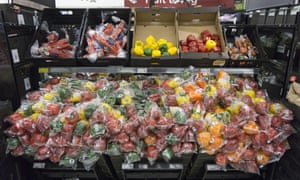
Recently the UK government has introduced a new 'Sugar Tax' which means that high sugar drinks have become a higher taxed item. The main goal is to entourage companies to reduce the sugar content of drinks to lower the price as part of a healthy living initiative. This got me think if a similar approach should be applied to single use plastics, specifically packaging. If you visit a supermarket everything is covered in single use plastic that just isn't necessary. I remember getting new toys a child and how difficult it was to remove the unnecessary plastic. My poor parents on Christmas must have cut themselves numerous times.Walking around the supermarket makes me think what actually needs it and the items with less plastic or are biodegradable are often more expensive. Shouldn't it be the other way around? With supermarkets creating over 800,000 tonnes of plastic a year I feel the government should be doing more to reduce waste production.

Related imageImage from The Gaurdian

Although the general public should be encouraged to reduce waste, companies should be targeted more in my opinion. My idea is that once a product has passed a certain amount of plastic (so over what is deemed necessary) they should be taxed to cover disposal and the environmental cost. This will make single use plastic items more expensive to consumers which in turn will also encourage consumers to seek alternatives for plastic. This could also result in large TNC's to invest in alternatives that are biodegradable and potentially tackle the ever growing micro plastic problem as there will be less plastic breaking down in our oceans. Did you know that 80% of plastic debris in the oceans come from land? The breakdown of these items create micro plastic fragments which are easily ingested by fish, particularly those lower in the food chain. This also causes chemicals to be released into the natural environment, such as BPA, many of which are toxic to living organisms.

 Not only will a plastic tax make fish populations healthier, but it will reduce the amount of plastic we, as the human population, ingest. We ingest a range of plastics that enter our bodies through contaminated food and water. One plastic we ingest is Polyvinylchloride (#3PVC), a key chemical in plastic food packaging, that has actually been linked to an increased rate of cancer and birth defects. With over a third of all seafood caught in the UK containing plastic, those with a high fish diet have the highest rate of ingestion. One study has shown that those with a high shellfish diet consume up to 11,000 plastic fragments.

We can't also forget that less plastic used for useless, and quite frankly stupid, packaging will reduce our oil consumption which is especially important as we are in danger of reaching 'peak oil'. With 8% of global oil use being manufacturing plastics, it would encourage better management and distribution of our shrinking petroleum reserves as well as reducing global greenhouse gas emissions.

Overall, I feel the TNC's should be held more responsible for their unsustainble use of plastics to reduce the amount of toxic plastic that we throw away and the only way to do this is with a financial incentive because we all know that is the only way to ensure this. I feel a plastic tax will make the plastic alternatives cheaper and therefore more widely used.

Further Reading