Showing posts with label university. Show all posts

Sunday, 22 April 2018

The Cost of Biofuels

With growing greenhouse gas emission being linked to oil consumption, it's no surprise that we as a population are keen to find a more sustainable alternative, the main opinion being that bio-fuel is most likely the best option. With global bio-fuel production growing 137 billion L in 2016, with this figure projected to rise, we really need to ask the question of this is the most sustainable alternative.

Image result for biofuels

So what are bio-fuels?
Bio-fuels are fuels created from organic matter (i.e. biomass and bio-waste) as an alternative to crude oil products with the most common forms being bio-diesel and ethanol. With bio fuels being widely used in developing countries it makes up 10% of global energy consumption and Brazil tops global production with 19.2 million L being produced in 2007. So fuel made from plants, sounds sustainable right? In my opinion this couldn't be further from the truth.

The first issue that should be raised is land use. In the US, annual oil usage is 134 billion gallons and in order to meet this demand 168 million acres of sugarcane would be needed. To me, this seems near impossible to achieve and the complete opposite of sustainable, especially when you factor in the rate the population is growing. With a growing population (that we are currently struggling to feed), shouldn't the land be used to grow food? The lack of agricultural land will result in an increase in food imports, increasing the food miles per person. Won't this just increase fossil fuel use from aircraft and container ships?

Say hypothetically we manage to overcome the fuel over food issue, the loss of biodiversity will be huge. Mass deforestation will have to occur to meet demand, putting already threatened species at risk. With Brazil being the leader in bio-fuel production, would this put even more pressure on the
already shrinking Amazon rain forest considering soy is used for bio-diesel? The Cerrado region has 8-9 million hectares of sugarcane plantation (used for ethanol fuel) which is a main cause for the ecosystem declining by 60%. With WWF claiming up to 10,000 species a year are going extinct, a growing bio-fuel industry would only increase this number as there would be a greater demand for this? Combine this with the growing demand for food and this figure rises even higher. Although I feel ethically we should conserve these areas, humans also benefit from biodiversity both economically and in terms of well-being. We gain food, water, fertile soil and some medicines from natural ecosystems, most of which are highest in ecosystems with the richest biodiversity. These can be sold and exported (e.g. tropical fruit, coffee) increasing income and security for individuals. Biodiversity also has cultural significance and have been linked to better mental health and social relations. Seeing as we gain so much from the natural ecosystems already present, should we not be looking at other alternatives for fuel?

The main benefit to bio-fuels is they are green and cut carbon emission right? Wrong. Yes, I am aware the plants used will act as a carbon sink so it could be argued that the bio-fuels themselves do not produce any additional greenhouse gases. However we need to take into consideration the secondary greenhouse gases produced as a by product of production. The majority of deforestation occurs as a result of 'slash and burn' methods will release a huge quantity of carbon dioxide, carbon monoxide, nitrous oxide and methane (which is more polluting that CO2). There will also be an increase in demand for fertilisers, increasing NO2 levels and ,considering NO2 has a global warming potential around 300 times greater than CO2, this will only amplify the enhanced greenhouse effect. There is also the added cost of fuel from machinery for planting and harvesting as well as the emissions from the production/conversion process which will have to be done on an industrial scale. With all of these considered, it really does question how green bio-fuels really are.

Image result for biofuels

My opinion is that there are other renewable energy sources available that could be developed that are more sustainable. Although I am all for phasing out petrol and diesel, I don't feel that the way to doe this is with biofuels.

Resources -

Friday, 13 April 2018

Should We Tax Plastic?

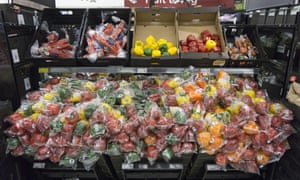
Recently the UK government has introduced a new 'Sugar Tax' which means that high sugar drinks have become a higher taxed item. The main goal is to entourage companies to reduce the sugar content of drinks to lower the price as part of a healthy living initiative. This got me think if a similar approach should be applied to single use plastics, specifically packaging. If you visit a supermarket everything is covered in single use plastic that just isn't necessary. I remember getting new toys a child and how difficult it was to remove the unnecessary plastic. My poor parents on Christmas must have cut themselves numerous times.Walking around the supermarket makes me think what actually needs it and the items with less plastic or are biodegradable are often more expensive. Shouldn't it be the other way around? With supermarkets creating over 800,000 tonnes of plastic a year I feel the government should be doing more to reduce waste production.

Related imageImage from The Gaurdian

Although the general public should be encouraged to reduce waste, companies should be targeted more in my opinion. My idea is that once a product has passed a certain amount of plastic (so over what is deemed necessary) they should be taxed to cover disposal and the environmental cost. This will make single use plastic items more expensive to consumers which in turn will also encourage consumers to seek alternatives for plastic. This could also result in large TNC's to invest in alternatives that are biodegradable and potentially tackle the ever growing micro plastic problem as there will be less plastic breaking down in our oceans. Did you know that 80% of plastic debris in the oceans come from land? The breakdown of these items create micro plastic fragments which are easily ingested by fish, particularly those lower in the food chain. This also causes chemicals to be released into the natural environment, such as BPA, many of which are toxic to living organisms.

 Not only will a plastic tax make fish populations healthier, but it will reduce the amount of plastic we, as the human population, ingest. We ingest a range of plastics that enter our bodies through contaminated food and water. One plastic we ingest is Polyvinylchloride (#3PVC), a key chemical in plastic food packaging, that has actually been linked to an increased rate of cancer and birth defects. With over a third of all seafood caught in the UK containing plastic, those with a high fish diet have the highest rate of ingestion. One study has shown that those with a high shellfish diet consume up to 11,000 plastic fragments.

We can't also forget that less plastic used for useless, and quite frankly stupid, packaging will reduce our oil consumption which is especially important as we are in danger of reaching 'peak oil'. With 8% of global oil use being manufacturing plastics, it would encourage better management and distribution of our shrinking petroleum reserves as well as reducing global greenhouse gas emissions.

Overall, I feel the TNC's should be held more responsible for their unsustainble use of plastics to reduce the amount of toxic plastic that we throw away and the only way to do this is with a financial incentive because we all know that is the only way to ensure this. I feel a plastic tax will make the plastic alternatives cheaper and therefore more widely used.

Further Reading

Thursday, 29 March 2018

Only One Earth

We only have one Earth. No plan B, no second planet tucked away at the back of the solar system. So why are we destroying it? Money? Development? Or are we just oblivious to the fact we need to change? 

From a young age the natural world has fascinated me. It started with a love for animals which made me want to become a vet and help save our beautiful companion animals. This developed into a love for being outdoors and a want to explore all the world has to offer by experiencing all the amazing creatures I'm their natural habitat. But as I grew older I realised the danger the natural world was in and the scale of it. I remember being horrified in school learning that people we willing to chop down our rainforests and damage our oceans for fuel and resources that would eventually run out and what made it even worse was that the burning of these fuels isincreasing climate change. This made me want to take my passion for the environment further and lead me to !y current uni course environmental science. I decided I was going to do my part to protect and conserve the diverse wildlife on our planet because once it's gone it's gone. 

I wanted to create this blog to share my thoughts and opinions on current environmental issues in the hope others will learn to help our planet and achieve a more sustainable lifestyle. I also felt this is the perfect way of sharing everything I learn at uni and apply my leaning to the real world. 

So join me, a passionate tree hugging student, towards my goal of a more sustainable lifestyle and I hope you leaning something while you're here.