it is widely believed that zoos help to grow the populations of endangered species and conserve endangered ones by developing breeding programmes that have saved species including the Socorro Dove from extinction. Zoos have data bases showing the recorded family and breeding history of each individual to ensure the gene pool can grow and there is no risk or inbreeding which can lead to a population collapse. These often involve either the exchange in individuals between zoos or the gifting of genetic material that can be used for artificial insemination. The main end goal of these programmes is advertised as release into the wild or sanctuaries but I wanted to look at a few example to see if this really was the case.
Regardless if you agree with the ethics of zoos and these programmes, you cannot argue there have been many captive breeding programmes that have been successful such as the Amur Tiger breeding programme in Europe that currently has 287 individuals within the programme.There have been cases of species being extinct in the wild that have increased in population size such as Przewalski's horses that have been extinct in the wild since the 1960's but a successful reintroduction programme the species conservation status was updated in 2008. There are also accreditation programmes for zoos to ensure that they are regulated and the animals are healthy and cared for properly. This also means the breeding programmes are monitored and have to be approved by a regulating body to ensure that no inbreeding or crossbreeding occurs as this will impact the health and life expectancy of any offspring. Despite these, different species are crossbred in zoos to attract visitors and increase profits. One example would be a liger which is a hybrid between a lion and tiger which are bred artificially in captivity as in the wild they are found on different continents making it impossible for them to be bred naturally. The USA has the greatest number with 30 with many of these cases being claimed to be an accident, however it is standard policy to keep different species separate so these claims are mostly likely false or are cases of neglect towards the proper care of animals.
There are several disadvantage to there being zoos open to the public the first of which being that animals become dependant on humans or used to their presence which can put them at risk of being hunted if they are released into the wild. This also means they can lose valuable skills such as the ability to hunt or source food on their own which, again, will greatly reduce their chance of survival. There is research to suggests that the survival rate for captive breed carnivores (i.e. lions and tigers) is only 33% as they have not learnt behavioural and survival instincts. This is because in the wild individuals are competing for mates, hunting grounds and food. Individuals born in the wild have learnt survival skills from their mother and others in the wild, putting them at an advantage over those raised in captivity. Therefore it can be argued that funds should be invested into conservation of wild habitats and species in the wild rather than of those in captivity.
I feel that is should be made clear the difference between a sanctuary/rehabilitation centre and a zoo. As a zoo dies aid conservation but has a focus on engagement with the public and ticket sales with education and conservation as a second priority. Rehabilitation centres take injured individuals from the wild for a short period of time with the aim of releasing them back into their natural habitat. In my opinion, rehabilitation centres are a better alternative to zoos and will educate people on local wildlife rather than those from the other side of the world. In terms of aiding conservation, you could argue that they do but they need to be regulated to ensure all the individuals have enrichment, a healthy diet and enough space to live. There should also be a chance for individuals to see their natural habitat if they have good enough survival chances but rehabilitation are by far a much better option.
References-
http://www.waza.org/en/site/conservation/conservation-breeding-programmes
https://www.nationalgeographic.com/animals/mammals/p/przewalskis-horse/
https://www.zsl.org/conservation-initiatives/conservation-breeding/amur-tiger-european-breeding-programme
https://www.nationalgeographic.com/animals/2008/01/predators-captivity-habitat-animals/
Showing posts with label wild. Show all posts
Showing posts with label wild. Show all posts
Thursday, 23 January 2020

Sunday, 19 May 2019
Rewilding: The most basic but effective conservation technique?
It's exciting to see a book about wildlife conservation in the UK being a top seller and highly advertised in bookstores. If you haven't heard of the book 'Wilding' yet by Isabella Tree I would highly recommend you pick it up. The book talks about the conservation technique of rewilding (obviously) in the Knepp estate in West Sussex and how this technique can be replicated in other habitats. The book defines this technique as essentially doing nothing. It is removing all intensive management and allowing natural succession of a habitat to occur with minimal human impact or intervention. The idea is that it will increase the population of the native species and possibly attract new species. This can also include the reintroduction of native species that are no longer found in that habitat (similar to my blogpost on beaver reintroduction). However, this is sparking some debate, particularly with locals when this technique is done on open land (or commons) such as Dartmoor which begs the question is a technique that we should be implementing more?
One key idea in this concept is to promote naturalistic grazing patterns to maintain sustainable vegetation levels and provide different exposure levels for a range of species. For example, in her book Tree links the population of Dartmoor ponies to an increase in the rare butterfly species the Marsh Fritillary; an insect that declined in population 66% between 1990 and 2000. She also rights about a study claiming the grazing of ponies has helped to increase the weight in grazing cows as the remove the tough upper layer of grass that bovines cannot digest. Whilst I don't recommend anyone eats meat, there is the argument that farmers can still raise livestock on the moor and can advertise the meat as organic and free range. This is what is done on the Knepp estate and has lead to an increase in profits for the landowners.
Another idea is to remove any intensive management techniques already in place such as drainage channels used in agriculture. The blocking of the channels (also known as grip blocking) will help to restore the water table leading to the reformation of rivers, streams and wetlands. This is what happened on the Knepp estate which has helped to increases the diversity of habitats, and subsequently increased overall species diversity. If this occurred nationwide it could help to increase the UK's ranking on the Biodiversity Intactness Index which is currently 189/218. In areas of Dartmoor this had lead to an increase in Sphagnum, moorgrass, braken and gorse which are the key plants that support endangered habitats such a blanket bogs. If this could be used to increase the size of our peatlands, this could significantly increase the rate of carbon sequestration as peat is a greater store of carbon than terrestrial plants.
The Knepp estate has also seen an increase in eco-tourism as they promote a guided nature walk and a sustainable camping site. Whilst the book does not mention a specific figure in profits, this could help bring tourists to areas, such as national parks, provided that they stick to paths and follow the guides to avoid damaging the plant life. This could create a new economy for locals, reducing our dependence on intensive agriculture which is always a benefit in terms of ethics and climate change.
However there are objections, mainly from farmers. The idea of reducing intensive farming will most likely result in reduced yield as fertiliser and pesticide isn't allowed under this scheme. Reintroduction programmes are also expensive with the beavers in Knapdale costing the Scottish government £2 million which, given the countries current financial state, could be invested in the public sector. Personally, I feel that ethically we should be looking to invest in our conservation and this method can be done on a budget and we need to take any measure we can to improve the state of our wildlife. So to sum up, I think rewilding could be easily implemented by landowners and help improve the UK's biodiversity.
Click here to buy Wilding on Amazon.
One key idea in this concept is to promote naturalistic grazing patterns to maintain sustainable vegetation levels and provide different exposure levels for a range of species. For example, in her book Tree links the population of Dartmoor ponies to an increase in the rare butterfly species the Marsh Fritillary; an insect that declined in population 66% between 1990 and 2000. She also rights about a study claiming the grazing of ponies has helped to increase the weight in grazing cows as the remove the tough upper layer of grass that bovines cannot digest. Whilst I don't recommend anyone eats meat, there is the argument that farmers can still raise livestock on the moor and can advertise the meat as organic and free range. This is what is done on the Knepp estate and has lead to an increase in profits for the landowners.
Another idea is to remove any intensive management techniques already in place such as drainage channels used in agriculture. The blocking of the channels (also known as grip blocking) will help to restore the water table leading to the reformation of rivers, streams and wetlands. This is what happened on the Knepp estate which has helped to increases the diversity of habitats, and subsequently increased overall species diversity. If this occurred nationwide it could help to increase the UK's ranking on the Biodiversity Intactness Index which is currently 189/218. In areas of Dartmoor this had lead to an increase in Sphagnum, moorgrass, braken and gorse which are the key plants that support endangered habitats such a blanket bogs. If this could be used to increase the size of our peatlands, this could significantly increase the rate of carbon sequestration as peat is a greater store of carbon than terrestrial plants.
The Knepp estate has also seen an increase in eco-tourism as they promote a guided nature walk and a sustainable camping site. Whilst the book does not mention a specific figure in profits, this could help bring tourists to areas, such as national parks, provided that they stick to paths and follow the guides to avoid damaging the plant life. This could create a new economy for locals, reducing our dependence on intensive agriculture which is always a benefit in terms of ethics and climate change.
However there are objections, mainly from farmers. The idea of reducing intensive farming will most likely result in reduced yield as fertiliser and pesticide isn't allowed under this scheme. Reintroduction programmes are also expensive with the beavers in Knapdale costing the Scottish government £2 million which, given the countries current financial state, could be invested in the public sector. Personally, I feel that ethically we should be looking to invest in our conservation and this method can be done on a budget and we need to take any measure we can to improve the state of our wildlife. So to sum up, I think rewilding could be easily implemented by landowners and help improve the UK's biodiversity.
Click here to buy Wilding on Amazon.
Tuesday, 30 April 2019
Scottish Beaver Reintroduction
The European Beaver that became extinct in the UK in the 16th century after being hunted to extinction for their fur and medicinal purposes. They excrete castoreum which is an oil originally used to treat headaches. Reintroduction programmes for this beautiful mammal began in the early 2000's in Scotland with aims of sustaining a healthy population in order to reverse years of hunting.
The first reintroduction programme began in 2001 and was located within the River Tay, Scotland's largest river. This area was chosen due to the high biodiversity, the designation of SSSI and the high population of salmon meaning there would be a good food source for the beavers. Despite some opposition after a few rouge escaped individuals, in 2011 up to 100 individuals were recorded with there being evidence of breeding and a growing juvenile population. The second project began in 2007 and was located within the Knapdale forest after an application was made by the Royal Zoological Society of Scotland and this project was given a gran of £1 million. and the Scottish Wildlife Trust. The first reintroduction was in 2009 where 16 beavers were realised. There were however a few mortality's and a few runaways meaning that in 2014 there were 10 beavers remaining. Since then a successful family unit has been established with a growing juvenile population and 28 more individuals are planned to be released within the next few years.. In February 2019, the European Beaver was granted European protected status and the appropriate measures should therefore be taken to protect the new populations that have been established.
There are many benefits to beavers being present within certain ecosystems the main one being that fact that they are considered ecosystem engineers as they have the potential to alter or maintain their habitat. Beavers remove trees in a similar manner to coppicing which reduces the size of the canopy and canopy cover. Whilst this may seem like a bad thing, it actually increases diversity as it allows ground plants to grow, thus increasing insect diversity. The trees removed during this process are used to create dams which block a stream or rivers water course. This can create or restore wetlands which are key habitats from migratory birds in particular. This also acts as a store of water that can be extracted during periods of drought. The dams create ponds that offer protection and a food supply for beavers as well as provide a habitat for aquatic life and invertebrates, potentially attracting a greater population of pollinators.
There has also been some opposition to the project with one argument being it will affect the local agricultural industry as these areas are dependent on the existing drainage system, affecting water supply. The other major issue was cost with many questioning the running cost of the project and if locals would have to contribute towards the maintenance as well as if this would take away local government spending from other area. Question were also raised if other important Scottish species would still be receiving the same amount of funding towards their conservation efforts. There were also question about the impact on the topography as many were concerned with the stability of the river bank and burrowing may cause the river bank to collapse, leading to an increase in flooding to the surrounding area.
Despite these issue I personally believe the benefits outweigh the possible disadvantages and projects like these help to maintain the ecosystem and improve diversity. Plus there is also the ethical issue as it was our (or our ancestors) fault for the initial extinction so shouldn't it be our responsibility to help introduce an maintain healthy populations? Hopefully this leads to other successful reintroduction programmes.
Resources -
 |
| A photo of the Eurasian Beaver. Photo from CreamTeam.be |
The first reintroduction programme began in 2001 and was located within the River Tay, Scotland's largest river. This area was chosen due to the high biodiversity, the designation of SSSI and the high population of salmon meaning there would be a good food source for the beavers. Despite some opposition after a few rouge escaped individuals, in 2011 up to 100 individuals were recorded with there being evidence of breeding and a growing juvenile population. The second project began in 2007 and was located within the Knapdale forest after an application was made by the Royal Zoological Society of Scotland and this project was given a gran of £1 million. and the Scottish Wildlife Trust. The first reintroduction was in 2009 where 16 beavers were realised. There were however a few mortality's and a few runaways meaning that in 2014 there were 10 beavers remaining. Since then a successful family unit has been established with a growing juvenile population and 28 more individuals are planned to be released within the next few years.. In February 2019, the European Beaver was granted European protected status and the appropriate measures should therefore be taken to protect the new populations that have been established.
There are many benefits to beavers being present within certain ecosystems the main one being that fact that they are considered ecosystem engineers as they have the potential to alter or maintain their habitat. Beavers remove trees in a similar manner to coppicing which reduces the size of the canopy and canopy cover. Whilst this may seem like a bad thing, it actually increases diversity as it allows ground plants to grow, thus increasing insect diversity. The trees removed during this process are used to create dams which block a stream or rivers water course. This can create or restore wetlands which are key habitats from migratory birds in particular. This also acts as a store of water that can be extracted during periods of drought. The dams create ponds that offer protection and a food supply for beavers as well as provide a habitat for aquatic life and invertebrates, potentially attracting a greater population of pollinators.
There has also been some opposition to the project with one argument being it will affect the local agricultural industry as these areas are dependent on the existing drainage system, affecting water supply. The other major issue was cost with many questioning the running cost of the project and if locals would have to contribute towards the maintenance as well as if this would take away local government spending from other area. Question were also raised if other important Scottish species would still be receiving the same amount of funding towards their conservation efforts. There were also question about the impact on the topography as many were concerned with the stability of the river bank and burrowing may cause the river bank to collapse, leading to an increase in flooding to the surrounding area.
Despite these issue I personally believe the benefits outweigh the possible disadvantages and projects like these help to maintain the ecosystem and improve diversity. Plus there is also the ethical issue as it was our (or our ancestors) fault for the initial extinction so shouldn't it be our responsibility to help introduce an maintain healthy populations? Hopefully this leads to other successful reintroduction programmes.
Resources -
- https://www.nfus.org.uk/news/news/union-reiterates-opposition-reintroduction-beavers-tayside-following-snh-report
- https://scottishbeavers.org.uk/beaver-facts/
- https://scottishbeavers.org.uk/beaver-facts/beaver-trial-faqs/when-do-beavers-start-breeding-and-are-they-around-all-year/
- https://www.wildlifetrusts.org/wildlife-and-wild-places/saving-species/beavers
- https://www.bbc.com/news/uk-scotland-glasgow-west-38096751
Friday, 5 October 2018
How Does Plastic Travel in the Ocean
 |
| Map of ocean currents - (Pidwirny, 2006) |
In 2017, scientists estimated that there was roughly 100 million tons of plastic in our oceans, with this figure constantly on the rise. The plastics are constantly circulating the globe via ocean currents which is the movement of sea water between locations, in a similar way to a conveyor belt, that are generated by a range of forces that change regionally including wind speed and force as well temperature difference. This has led to large accumulations, particularly of microplastic, specific areas of the ocean with the most well-known being the Great Pacific Garbage Patch. All the mentioned factors (plus many more) mean that rubbish from my university in Plymouth could end up polluting the Great Barrier Reef.
Ocean currents are defined as “a horizontal flow of water through the ocean” (according to the freedictionary.com) that redistributes heat from the sun through the globe. The movements that generate the currents are often seasonal and affected by a range of factors including:
• Differences in temperature
• Wind direction and speed
• Gravitational pull from moon and sun
• Rise and fall of the tides
• Salinity
• Atmospheric pressure
The global system of ocean currents has an important role within a range of ecosystems as well as the global climate. Ocean currents carry heat from tropical regions and transports and redistributes this heat away from the equator to warm coastal areas, making land more habitable and increasing soil fertility. They also have an impact on the weather as warmer water has a higher rate of evaporation, resulting in heavier rainfall in tropical regions which allows the tropical rainforests to have the heavy rainfall and humidity it is known for. This is what gives these rainforests the fertile soil that allows the beautiful tropical plants to grow. Currents also increase the biodiversity in the photic zone (or the top layer of the ocean) as upwelling occurs that bring nutrients to the surface. This allows phytoplankton to grow and increase in population that increase oxygen levels and provide more food for the primary consumers in the food chain. Needless to say this has a knock on effect and affects higher trophic levels within the ecosystem.
The global transport of plastics via ocean currents has created ‘rubbish hotspots’ such as the Great Pacific Garbage Patch. Despite public belief, the Great Pacific Garbage Patch is not a large mound of debris in the middle of the pacific like the name suggests and it is not even visible by satellite. The other name the Pacific Trash Vortex describes the area much better as it is a gyre containing high concentrations of marine litter and chemicals that circulate the North Pacific Ocean. With 1.9 million pieces of microplastic per square mile, the risk to the ecosystem in this area is huge and as 70% of all litter in the ocean sink to the floor the unseen impacts may be even greater than expected. The North Pacific Gyre keeps the debris circulating the North Pacific Ocean and creates convergence zones that are the natural gathering points within the ocean current system. In the case of the North Pacific, the two largest convergence zones are the western Garbage Patch and the eastern Garbage Patch (shown below). The constant movement of the gyre means that the microplastic and other marine debris remains trapped within the North Pacific ecosystem, amplifying the damage even more.
 |
| A map showing the North Pacific Garbage patch, (NOAA - Response and Restoration, 2013) |
As the amount of plastic within our oceans continues to
rise, we could be seeing more gatherings of plastics like the pacific garbage
patch as it is transported globally and deposited by ocean currents. This has a
huge impact on biodiversity in these areas and have been ingested by species, particularly
seas turtles, as well as entangling others. With 17% or all threatened marine
species being affected by plastic in our oceans, we need to be more aware that
plastic does travel within our oceans and dropping a plastic bottle on your
local beach could impact the Great Barrier Reef or be ingested by the
endangered Leatherback turtle.
References -
- Krieger, A. (2016, Febuary 7). What will it take to get plastics out of the ocean? Vox: https://www.vox.com/2016/2/7/10928788/ocean-plastic-pollution-solutions
- National Geographic. (2014, September 19). Great Pacific Garbage Patch. https://www.nationalgeographic.org/encyclopedia/great-pacific-garbage-patch/
- NOAA - Response and Restoration. (2013, Febuary 7th). How Big Is the "Great Pacific Garbage Patch"? Science vs. Myth. Office of Response and Restoration: https://response.restoration.noaa.gov/about/media/how-big-great-pacific-garbage-patch-science-vs-myth.html
- Pidwirny, M. (2006). Surface and Subsurface Ocean Currents: Ocean Current Map. Retrieved from Fundamentals of Physical Geography: http://www.physicalgeography.net/fundamentals/8q_1.html
- Sea Turtle Conservancy. (2017). Information About Sea Turtles: Threats from Marine Debris. Sea Turtle Conservancy: https://conserveturtles.org/information-sea-turtles-threats-marine-debris/
Saturday, 11 August 2018
Easy Ways To Help Our Planet
 |
| Sue McMurray, WSU, https://news.wsu.edu/2015/10/01/hotel-greenwashing-dirties-eco-friendly-reputation/ |
With climate change being a current issue and continuing to grow in concern, it is more important that ever that we all do our part to help protect the environment. When talking to friends and family, many of them believe that it will be far to difficult or expensive. Granted the complete zero waste lifestyle, although possible, does take a lot more effort than a 'conventional' lifestyle but there are several simple changes or steps every homeowner can take to reduce our environmental impact.
First thing is to buy second hand or recycled goods. This can include using the library, charity shops or online stores such as Vinted (which I have spent too much time one ... whoops) which offer absolute bargains that will not only save you money but it will also helps reduce the demand for natural resources that are finite. Not to mention a reduction in the use of chemicals, dyes and synthetic fibres that end up polluting both our terrestrial and aquatic environments. Materials such as polyester (which makes up 60% of all clothing) and nylon is manufactured using petroleum which we all know contributes to the enhanced greenhouse effect as well as leading to the creation of micro-plastics due to their non-biodegradable nature. With on 20 items of clothing being manufactured per person annually, it is no wonder that the fashion industry is the second most polluting industry globally and accounts for 10% of the global carbon footprint which makes sense if you take into account the transportation, soil erosion, water use and waste production.
Did you know it has been reported that paper coffee cups are responsible for the cutting of 6.5 million trees? Seems like a ridiculous number for a single hot drink. These cups have also been linked to the consumption of 4 billion gallons of water. Most of us think this isn't an issue if we just recycle them. Well you're wrong. These cups are coated in a polythene resin that makes it water proof which unfortunately means that the 16 billion cups we use every year end up in landfill. The simple solution is to take your own cup. I keep mine in my bag all the time and comes in handy at work, the library or just when I'm out and about. You can even buy fold up ones which take up less space. You can even save money with Costa and Starbucks offering a 25p discount and Pret offering double that. It may not seem like a lot but every penny counts!
Did you know that the meat industry is responsible for 20% of greenhouse gas emissions? Going veggie even just for one or two days a week will help to cut your carbon footprint massively. Even though I think a meat free diet is the best, cutting your meat intake will significantly reduce your environmental impact. With agricultural emissions predicted to increase 80% by 2050, it is more important than ever we start to understand the link between our diet and environmental damage. I could write pages on this so I might write a full post on this. I highly recommend that you watch Cowspiracy on Netflix as it sheds light on the truth about this link.
Although the 5p bag charge has encouraged us to bring our own bag, there is still those rare occasions we do buy one. Globally, we are using roughly 500 billion single use carrier bags annually which puts our environment at great risk with thousands of animals dying every year from ingestion alone. These bags easily end up in our oceans and lead to an increase of microplastic when they breakdown in sunlight and we are all aware of those dangers. My advice is to buy one of those fold up bags and keep them in your bag. That way when you buy something unexpectedly (or something you maybe shouldn't have) you'll be prepared to help the environment.
Get some reusable containers and prep lunch the night before. This will stop you from buying those supermarket meal deals that use a huge amount of single use plastics which have a huge ecological footprint. Obviously glass containers are better as there is less petroleum used, they're more durable and are easier to recycle. Not to mention they don't produce those dreaded microplastics!! You can also freeze leftovers for those days you can't be bothered to cook which may reduce the amount of take out you eat, again reducing the waste you produce. In 2015, the UK sent 7.3 million tonnes of food waste to landfill. Not only is this costing families and average of £700, but the food will breakdown in the landfill which will lead to an increase in methane production. Over a time period of 20 years, methane will do between 25 and 100 times more damage carbon dioxide meaning the extra from last nights dinner you threw away, could actually impact our environment.
If you're a keen gardener you should definitely have your own compost heap. Not only will this save you a huge amount of money long term (seeing as a bag of compost is roughly £7) but it will help reduce your environmental impact. Provided you turn the soil regularly, it will minimise the amount of methane product as less food waste makes it to landfill. Most pre-bagged compost is peat based, which is the decaying remains of plants such as sphagnum mosses, that has been mined for peat bogs that are often SSSI's. Unless the bag is clearly labelled 'peat free' the average bag of compost is on average 70% peat meaning that by buying these bags you could be encouraging the destruction of a rapidly declining habitat. In Ireland, roughly 80% of peat bogs have been destroyed which is a large number considering that peat bogs covered 17% of Ireland's land before we began mining. This put creatures, such as the otter and the peregrine falcon at risk of a declining population. There is the other issue of the large amount of greenhouse gases emitted by peat mining. Peat bogs are a large carbon sink and the draining process releases a large quantity of carbon dioxide amongst other greenhouse gases. Annually peat emits roughly 400,000 tonnes of carbon which is also caused by the spreading of peat compost that rapidly turns into carbon dioxide. Needless to say composting your food waste, from fruit and veg to coffee beans, is a great way of cutting your impact on landfill and reduce your carbon emissions. Not to mention you don't need that nasty plastic packaging that compost comes in.
 |
| A photo of a peat bog - Susan Cooper, https://suzancc.blogspot.com/ |
Obviously there is so much more we can be doing, like using metal reusable bottles and seperating our waste, but these are just five ideas that are so simple to try. If you have any other tips feel free to share them below!
References -
- Dr. Mercola, Care What You Wear: The Benefits of Becoming Clothing Conscious, Mercola.com, October 2016, https://articles.mercola.com/sites/articles/archive/2016/10/12/toxic-clothing-chemicals.aspx
- Deborah Drew and Genevieve Yehounme, The Apparel Industry’s Environmental Impact in 6 Graphics, World Resource Institute, July 2017, http://www.wri.org/blog/2017/07/apparel-industrys-environmental-impact-6-graphics
- Green Match, The Effects of Paper Coffee Cups on The Environment, February 2018, https://www.greenmatch.co.uk/blog/2015/06/the-effects-of-paper-coffee-cups-on-the-environment
- Nina Spitzer, The impact of disposable coffee cups on the environment, Sheknows, July 2009, https://www.sheknows.com/home-and-gardening/articles/810025/the-impact-of-disposable-coffee-cups-on-the-environment
- Plastic Free UK, Plastic Stats, May 2018, http://plasticfree.co.uk/plastic-stats/
- Hazel Sheffield, How the UK's household food waste problem is getting worse, The Guardian, January 2017, https://www.independent.co.uk/news/uk/politics/how-the-uks-household-food-waste-problem-is-getting-worse-a7520171.html
- Animals United Movement A.U.M, The Facts, Cowspiracy: The Sustainability Secret, 2014, http://www.cowspiracy.com/facts/
- Department of the Environment, Heritage and Local Government, Peatlands, 2007, http://www.noticenature.ie/Peatlands.html
- Craig Sams, Gardeners should end their love affair with peat, The Gaurdian, April 2012, https://www.theguardian.com/environment/green-living-blog/2012/apr/05/gardeners-peat-carbon
Sunday, 8 July 2018
The Five Plants You NEED To Grow
With urbanisation continuing to rise and open green areas in rapid decline, how we use our gardens is becoming increasingly important for the wildlife and the environment. Around 1,000 of our agricultural plants rely on pollinators to grow to increasing the habitat available for birds, bees and bats is important for our food system and larger populations leads to a higher food production. They are also the basis of the ecosystem and the food chains as they contribute to the growth of wild fruits and green plants that feed the primary consumers such as rabbits and wild mice. They can also protect habitats of large economic and cultural significance. Experts say that the majority of plants should be native to this country (around 70%) to replicate the natural habitat of British wildlife. Another thing to remember is to allow plants and organic matter to decay to attract other invertebrates ( such as woodlice) and larger mammals like hedge hogs that are also becoming more vulnerable. So, here are the top five plants to include in your garden to help see these populations rise.
Lavender -
Not only will these add a beautiful colour to your garden and smell amazing, but pollinators love them. They provide a large amount of nectar and pollen which can increase bee and butterfly populations in particular. Ladybirds also love them which eat pests such as aphids and the smell also repels other pests and can act as a natural form of pest control which could also benefit any vegetable patches you may choose to grow.
Holly -
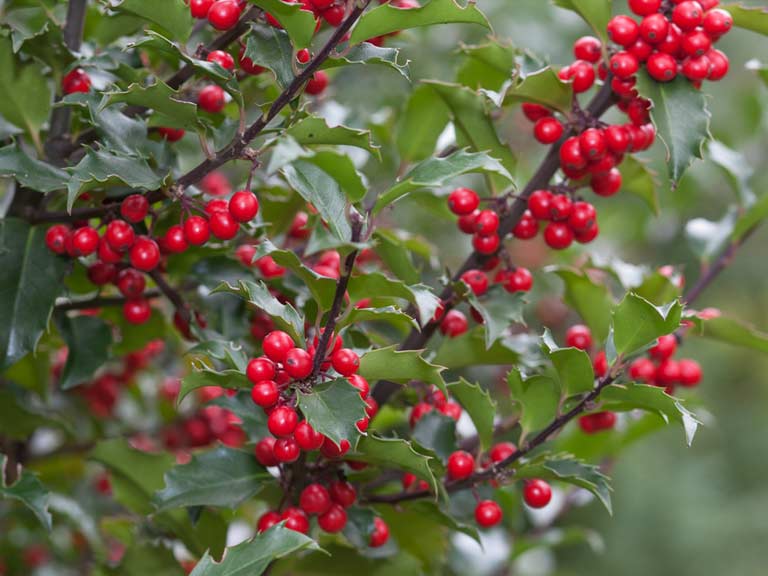
The holly tree is an evergreen plant meaning it grows all year round and provide a food source for birds in particular and can ensure populations survive winter. With over 400 species of the holly plant, it attracts a wide range of wildlife from thrushes and blackbirds to butterflies and moths. Due to its evergreen nature it is used for nesting and can be used by small mammals during the hibernation season.
Hawthorn -
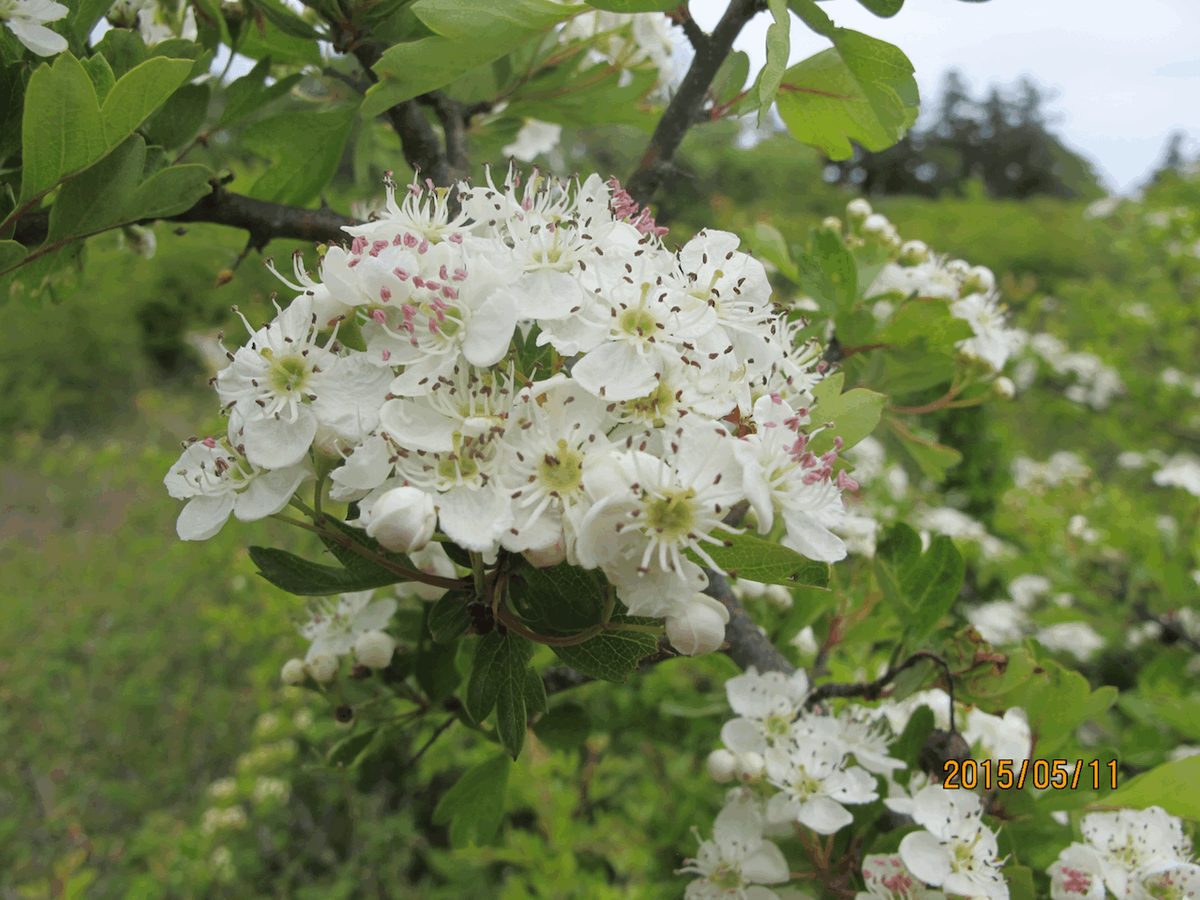
Hawthorns are one of the most common shrubs in the UK and attract around 150 species of insects and can provide a habitat for birds such as Goldfinches and Thrushes as it produces berries during the autumn. When the flowers bloom during the summer months, bumble bees love this plant and it also provides a habitat for ladybirds and earwigs. It is also a great food plant for caterpillar and can boost butterfly populations in your garden.
Honeysuckle -
Honeysuckle is so important to a wide range of species, particularly pollinators due to the incredibly sweet nectar it produces. . It also is important to the rare white admiral butterfly as the caterpillars will only feed on this plant. It also provides food and shelter for small mammals, in particular dormice.
Thyme -
Experts encourage gardeners to include a wild range of plants including herbs. Thyme is a great one to grow as it provides nectar for bees and other pollinators but the ground cover it provides creates a safe habitat for other small invertebrates including detritivores that can improve the soil quality and organic matter content.
Obviously, I'm not saying that if you don't plant these you don;t care about the environment because there are a range of factors to take into account such as the type of property you own, allergies and any pets you may have. If you have a large garden be sure to include a range of plants from trees, shrubs, flowers and herbs. Also don't forget to include grass as some butterflies have been known to lay eggs in the tall blades. In my opinion, we all need to be doing our bit to improve insect populations as they are vital for our way of life so even just planting a few flower pots along a balcony of a flat is a great start and should be encouraged.
Lavender -
Not only will these add a beautiful colour to your garden and smell amazing, but pollinators love them. They provide a large amount of nectar and pollen which can increase bee and butterfly populations in particular. Ladybirds also love them which eat pests such as aphids and the smell also repels other pests and can act as a natural form of pest control which could also benefit any vegetable patches you may choose to grow.
 |
| Photo from https://www.theflowerexpert.com/content/giftflowers/flowersandfragrances/lavenders |
Holly -
The holly tree is an evergreen plant meaning it grows all year round and provide a food source for birds in particular and can ensure populations survive winter. With over 400 species of the holly plant, it attracts a wide range of wildlife from thrushes and blackbirds to butterflies and moths. Due to its evergreen nature it is used for nesting and can be used by small mammals during the hibernation season.
 |
| Photo from https://www.saga.co.uk/magazine/home-garden/gardening/plants/trees/how-to-grow-holly-and-get-berries |
Hawthorn -
Hawthorns are one of the most common shrubs in the UK and attract around 150 species of insects and can provide a habitat for birds such as Goldfinches and Thrushes as it produces berries during the autumn. When the flowers bloom during the summer months, bumble bees love this plant and it also provides a habitat for ladybirds and earwigs. It is also a great food plant for caterpillar and can boost butterfly populations in your garden.
 |
| Photo from https://www.nwcb.wa.gov/weeds/english-hawthorn |
Honeysuckle -
Honeysuckle is so important to a wide range of species, particularly pollinators due to the incredibly sweet nectar it produces. . It also is important to the rare white admiral butterfly as the caterpillars will only feed on this plant. It also provides food and shelter for small mammals, in particular dormice.
 |
| Photo from https://www.gardenia.net/plant/Lonicera-fragrantissima-Sweetest-Honeysuckle |
Thyme -
Experts encourage gardeners to include a wild range of plants including herbs. Thyme is a great one to grow as it provides nectar for bees and other pollinators but the ground cover it provides creates a safe habitat for other small invertebrates including detritivores that can improve the soil quality and organic matter content.
 |
| Photo from http://www.johnnyseeds.com/herbs/thyme/orange-thyme-seed-2934.html |
Obviously, I'm not saying that if you don't plant these you don;t care about the environment because there are a range of factors to take into account such as the type of property you own, allergies and any pets you may have. If you have a large garden be sure to include a range of plants from trees, shrubs, flowers and herbs. Also don't forget to include grass as some butterflies have been known to lay eggs in the tall blades. In my opinion, we all need to be doing our bit to improve insect populations as they are vital for our way of life so even just planting a few flower pots along a balcony of a flat is a great start and should be encouraged.
Saturday, 5 May 2018
One Week's Worth of Plastic

So recently I've become interested in the zero waste movement and trying to cut down my plastic use. I feel that I do not produce a large amount of waste (seeing as I'm a single person household) and thought it would be interesting to test this and see how much single use plastic I throw away. I feel that this photo doesn't show how large this like actually was which also disappointed me because I truly believed I was making a conscious effort to reduce my plastic but evidently I was wrong. This got me thinking if zero waste is possible considering supermarkets cover everything in a toxic layer of plastic. Thankful I have alternatives, such as the market but for others it may not be affordable or accessible. Seeing as plastic is such a current issue why is it so hard to cut our use of them and who is really responsible for such high plastic consumption?
Obviously, the consumer holds the majority of responsibility because they chose what products they purchase and have the power to chose products with less plastics. However, I do understand the some families will be driven by cost and they may not have the option to chose zero waste options if they are more expensive. I did notice that Aldi (in my opinion) had one of the greatest unnecessary use of plastic and Aldi is known for being one of the more reasonably priced supermarkets. So this made me think if retails are ultimately responsible seeing as the majority of plastic is honestly just unnecessary. Do bananas really need to come wrapped in a single use plastic bag? This goes back to my belief that retailers should be held accountable for the unsustainable use of our finite resources.
Here are a few of the simple steps I have taken to reduce my plastic use:
- Bringing my own reusable cup
- Reusable shopping bags
-Buying plastic alternatives
- Bio degradable bin liners
- Buying loose fruit and veg
- Packing my own lunch in a reusable container
Thursday, 29 March 2018
Only One Earth
We only have one Earth. No plan B, no second planet tucked away at the back of the solar system. So why are we destroying it? Money? Development? Or are we just oblivious to the fact we need to change?
From a young age the natural world has fascinated me. It started with a love for animals which made me want to become a vet and help save our beautiful companion animals. This developed into a love for being outdoors and a want to explore all the world has to offer by experiencing all the amazing creatures I'm their natural habitat. But as I grew older I realised the danger the natural world was in and the scale of it. I remember being horrified in school learning that people we willing to chop down our rainforests and damage our oceans for fuel and resources that would eventually run out and what made it even worse was that the burning of these fuels isincreasing climate change. This made me want to take my passion for the environment further and lead me to !y current uni course environmental science. I decided I was going to do my part to protect and conserve the diverse wildlife on our planet because once it's gone it's gone.
I wanted to create this blog to share my thoughts and opinions on current environmental issues in the hope others will learn to help our planet and achieve a more sustainable lifestyle. I also felt this is the perfect way of sharing everything I learn at uni and apply my leaning to the real world.
So join me, a passionate tree hugging student, towards my goal of a more sustainable lifestyle and I hope you leaning something while you're here.
Subscribe to:
Posts (Atom)