Saturday, 22 September 2018

Dear Hollywood, Stop Making Us Afraid of Sharks

25 Great White Shark HD Wallpapers | Backgrounds ...
Photo of a Great White Shark
Photo from https://wall.alphacoders.com/by_sub_category.php?id=206047&name=Great+White+Shark+Wallpapers

I love sharks. I think they're some of the most beautiful and interesting species in our oceans which is the main reason I want to study them for my dissertation. My dream is to be able to travel to Australia and study the Great White and work on conserving them. However, this seems to be an unpopular opinion with 39% of adults in the UK saying they HATE sharks, with just under half of these justifying their answer with the argument that they attack humans. Granted the slightly scary appearance, particularly the large teeth, can scare some but could the main reason be the fact they often come off a vicious monsters in blockbuster films such as The Shallows. These films are designed to scare us and keep us on the edge of our seats and as a result they have been mad out to these giant human killers that isn't really the case. I feel the majority of selachophobia, or a fear of sharks, has been brought about by the growing genre of shark attack films.

Firstly, I am not saying that shark attacks do not occur because they do and beach goers in shark waters should be cautious. Everyone is aware of the tragic case of surfer Bethany Hamilton who had her arm bitten off in 2003 by a tiger shark. However, despite what Hollywood will have us believe, the danger from dying as a result of a shark attack is far smaller than we may initially think. Did you know you have a 1 in 3,748,067 chance of dying by shark attack? To put this into perspective, the risk of dying of heart disease is 1 in 5 and dying as a result of a car accident is 1 in 84. Even your chance of drowning is 1 in 1,134 making the ocean itself far more dangerous than the scariest creatures in them. In fact there are on average 4 sharks related deaths a year which is 16 less than deaths caused by cows (both in the USA). Another false fact seemingly portrayed is that we're a tasty snack for sharks, particularly Great Whites but if they bite us, they tend to spit us out because our bones are too dense for their slow digestive systems. In fact the only reason they bite us (in the very few cases that there actually are of shark bites) is out of curiosity. Although all sharks are carnivores, roughly 70-80% of their diet is made up of small fish making the chance of being bitten by a shark very slim. With over 465 known species, very few even pose a threat to humans and even the largest species (the Whale Shark) are actually filter feeders meaning they feed in a similar way to most whales with a diet mainly made from plankton. They also range in size the smallest being the Pygmy shark at 7-inches long suggesting the Hollywood image that shark are giant hunters lurking along our coastlines may be inaccurate.

How Different Shark Species Measure Up [Infographic ...
Comparision of the size of different shark species.
Photo from https://www.pinterest.co.uk/pin/511299363927109368/

As a matter of fact, we need sharks. Firstly, sharks contribute to ecotourism that help boost local and national economies. In Fiji alone, 78% of all visiting divers participate in some form of shark diving which created US$5.9 million in taxes in 2010. In fact, the shark-diving industry in Fiji is valued at US$42.2 million annually. This isn't taking into account the 'economic multipliers' that benefit the local economies including accommodation for tourists as well as tourists spending money in local businesses. In fact in Ganbaai (South Africa)50% of all local business sales are related in some way to Great White Sharks. Sharks also play a very important role within the ecosystem as they keep the food webs in balance by maintaining healthy fish populations. Sharks are often the top predators and are often referred to as keystone species as the health of the ecosystem can be estimated by monitoring the shark population. Without the sharks, the prey populations (i.e. small fish) would get too big causing overgrazing of the sea plants therefore reducing the amount of oxygen available. Not to mention this limits the damage to coral reefs from large fish populations. Believe it or not, they can actually limit or stop the spread of disease as they are more likely to prey on the weak, sick and older fish meaning they stop outbreaks and a declining population. Did you also know that sharks have helped to design wet suits? Biomimetics is using a natural structure (or an organism) in science and engineering so shark skins were studied to create the aerodynamic style of wet suits. These are just three ways sharks actually benefit us and the planet. I could write lists and lists about all the ways we need sharks but it would take forever to read and also that;s a lot of effort to write.

So why are we so afraid of sharks if they don't actually pose a huge threat to us, in fact it has been proven they benefit us. Personally I feel that they are turned into villains by the film industry. As money is the priority for this industry (well actually most industries) scary things sell so any predator is at risk of being displayed inaccurately with little scientific evidence. Could this be increasing the amount of shark hunting? That however is up for debate. 


Resources - 

Sunday, 16 September 2018

What Does Being 'Eco-Friendly' Really Mean?

Eco-Friendly Cleaning & Storage Products
Image from https://www.lifestorage.com/blog/storage/celebrate-earth-day-eco-friendly-cleaning-storage-products/

Is it just me or has being 'eco-friendly' become very on trend recently? With every supermarket having a larger range of environmentally friendly products and more people making more ethical choices being environmentally friendly seems to be growing within the general public. The big question is do we actually know what this means or are we just trusting labels that say 'green' to improve our sustainability?

With many people, my mother included, bot actually knowing what the term 'eco-friendly' really means. When I spoke to my mum about this she just thought it meant minimising your impact on the environment but realistically she had no idea how to do this. Environmentally friendly is defined as "that has no or the least possible impact on the environment" (The Free Dictionary) which appears to be the standard definition so well done mum. Basically it means acting in a certain way to make your impact on the natural environment to a minimum in order to promote and live a more sustainable life to the best of your ability. Let's just accept that (as sad as it may be) in modern day society but we can make a more conscious effort with many people turning to these labelled, eco-friendly products in an attempt to cut their carbon footprint. There are also a few simple easy ways to help you achieve a more eco-friendly lifestyle.

Not to get on my vegan high horse, but one big way to do this is to cut down your meat consumption. 18% of all greenhouse gas emission is from animal agriculture but these emissions are expected to rise 80% by 2050. If you think about it, we have the emission from transporting livestock, heating the farms and fertilisers. I could go on an on about how this is important but I would recommend you watch Cowspiracy if you don't believe me.

Another way is to look at your energy and better ways to conserve it in order to reduce our fossil fuel consumption to help reduce that ever looming climate change. Simple ways such as turning off your lights and maximising the amount of daylight can not only lower your carbon footprint but can also help slash your energy bill saving you a pretty penny. Did you know that dusty light bulbs can reduce the light output but up to 50% meaning you're going to need more electricity and bulbs to lighten up your living room. Another way is when purchasing new items focus on those efficiency labels!! Always make sure they're in the green to help slash that carbon footprint. Check out Conserve Energy for more ways to save energy (and money).

Another way is to buy recycled products. One simple swap is to buy the toilet paper (which is defiantly available from Tesco and Sainsbury's) that is made from recycled paper that reduces the amount in landfill, the amount of chemicals used for bleaching and reduces the amount of raw materials we use. There is also recycled stationary available which is perfect for students, such as myself, looking to be much more green. The Green Stationary Company offers a wide range but I have seen some of these around the supermarket so just keep your eyes open and read the packaging. There are plenty of products out there for you to try so get researching and feel free to share in the comments.

What Your Recyclables Become
Image from Department of Environmental Protection
https://www1.maine.gov/dep/waste/recycle/whatrecyclablesbecome.html
 Another key way to to maximise your use of reusable products this can include reusable cups, toiletries and containers to help cut the dreaded single use plastic present in your home. On average 50% of the plastic we use are thrown away after just one use swapping to a reusable razor (or even a straight razor) is just one product to can by to help cut waste. In fact, my razor is made from recycled yogurt pots (check me out). Did you know that the average woman uses up to 16,800 disposable pads and tampons throughout her lifetime?  With all of this going to landfill and with a high amount of plastic used, these defiantly do not count as green. Many environmentally conscious women are turning to washable cotton pads as well as menstrual cups which are definitely available from Boots and Superdrug. To get closer to that desirable 'eco-friendly' status, we should aim to cut our dependence on single use plastics. 

So overall, being eco-friendly is making an effort to cut our carbon footprint and buy sustainable. I would recommend you get online and look at products to help you achieve this and look for alternatives next time you're in the supermarket. Maybe even shop locally and check out your locally fruit and veg stall like I do every week. However, it is important to remember that in modern society it is nearly impossible to be 100% green. Just do your best and be conscious of your impact on the environment and do your best to cut it and reduce it as much as possible.


Resources -

Thursday, 13 September 2018

Ghost Fishing: The unseen problem in our oceans

Fishing for Ghosts: the removal of derelict fishing gear ...
photograph of ghost gear on the sea bed -
https://www.ecosia.org/images?q=ghost+fishing#id=5D43E26A116A7D8952B16078B4095F728572BE87

With the growing human impact on our oceans being widely mentioned in the media (thanks Blue Planet) things like using plastic straws have fallen out of fashion with the general public being more conscious of our impact on marine life. Although I am so happy about the interest in our oceans, plastic straws only make up a small percentage of plastic waste and most of it is waste from the fishing industry. This got me thinking about ghost fishing, a subject I studied during college, that has such a huge negative impact but is barely spoken about in the media in an attempt to raise awareness of this growing problem.

So what is 'ghost fishing'? It's when old fishing equipment that is no longer in use has been abandoned in our oceans and still traps fish and other marine animals including the beloved sea turtle. This creates a positive feedback mechanism as the trapped fish act as bait for larger fish, capturing and endangering a greater number of marine species. The abandoned equipment also causes alterations to the sea floor, damaging the sea bed and the habitat for species including sea stars and crabs.

The abandoned 'ghost gear' accounts for 10% of all marine litter (which is a lot higher than plastic straws) and entangles, on average, 11 whales annually in West Coast America alone so imagine how many become injured or die globally because of this abandoned equipment. With an estimated 640,000 tonnes of fishing nets (not including lobster traps and other fishing gear) polluting our oceans we are putting a huge number of rare species at risk unnecessarily. With a single net entangling between 30-40 marine animals, these have a severe impact on the ecosystem as they have been known to entangle a huge range of species from sharks and whales to sea stars and small fish. Another environmental issue is the damage to habitat. Heavy equipment ,such as crab and lobster traps, sink to the bottom and disturb the sea bed and can be responsible for dredging as well as smothering organisms that live on the sea bed including sea grasses and crabs. Coral reefs are at great risk as ocean currents carry heavy traps that can destroy the coral habitat.

Currently there are several programmes an initiatives globally that aim to tackle and reduce this problem including the Global Ghost Gear Initiative (GGGI), which DEFRA is participating in, that aims to improve the health of our marine ecosystems by removing discarded fishing gear. One thing they do is collect evidence and information including how much equipment has been collected and it is mapped to work out any trends and possible impacts to biodiversity by locating any hotspots. They also aim to define and enforce polices, including management of gear on board to ensure that no equipment is lost at seas particularly in stormy weather.  These are just a few simple ways this initiative is helping this growing issue and with participation from governments, NGO's and the private sector the GGGI will continue to develop further and hopefully achieve the aim of cleaner oceans. One example of a participating organisation is KIMO international which run the GGGI Solution Project in Scotland which is responsible for removing 50 tonnes of ghost gear from Scottish coastlines.

Ghost fishing has become much more regulated by governments who are aiming to punish those responsible but in my view much more can be done to tackle this growing issue starting with public awareness. Let's focus less on plastic straws and more on larger marine debris that has a much larger, and more fatal impact.


Resources -


Sunday, 2 September 2018

Is organic food better for the environment?

Image result for organic crops
Organic Food photograph, http://csglobe.com/booming-organics-u-s-farmers-forced-to-import-organic-crops-to-meet-non-gmo-demand/

The UK organic food industry grew 7.1% from last year and is continuing to grew in popularity with consumers as many believe this will not only benefit our health but the environment. With growing concerns about GMO's and pesticides driving this belief, it is no wonder that the £2 billion industry continuing to grow with every supermarket seemingly expanding their organic range. This got me thinking if there was any truth to these claims or is this just a marketing tactic to get us to buy more expensive food?

So what does organic food really mean. Well according to DEFRA, organic food is defined as "the product of a farming system which avoids the use of man-made fertilisers, pesticides; growth regulators and livestock feed additives. Irradiation and the use of genetically modified organisms (GMOs) or products produced from or by GMOs are generally prohibited by organic legislation." This means that organic farms are working to achieve a more sustainable food system that, in theory, is more socially, economically and (most importantly) more environmentally sustainable. Basically organic farmers aim to produce a more 'natural' farm environment by using nothing that has been man made which sounds like this is better for the environment but is this really the case?

Firstly lets look at pesticides which are chemicals that are often sprayed on crops to kill pests in an attempt to increase crop yields and subsequently profits. Obviously chemical pesticides, including herbicides and insecticides, are man made and every food business has to comply with UK legislation and regulations that limits the Maximum Residue Levels. Despite the strict regulations and monitoring there are some major issues that threaten the environment. One main issue is that pesticides often threaten and kill non target organisms, including key pollinators such as bees, which are vital to any ecosystem. One example of this is DDT which was widely used after WWII and was found to be toxic to many marine animals such as seas shrimp. However, the main issue was caused by biomagnification in birds higher up the food chain as it caused egg shells to become thin, causing a decline in juvenile populations. There is also the issue of leaching and runoff that often occurs after periods of heavy rainfall which is a fairly common occurrence in the UK. This often leads to the polluting of nearby water sources which, again, threaten aquatic life but also affects the surrounding terrestrial wildlife. Nearby soil can become polluted and/or reduce soil fertility, potentially causing a decline in wild plant population. This may lead to a smaller habitat for small mammals and insects so in theory, organic food could help to improve biodiversity as it stops the use of toxic chemicals which can build up in the surrounding area.

Obviously the main disadvantage of organic food is that it is more expensive so many of us opt for the cheaper option but I'm more interested in the environmental impact and the possible sustainability. One main threat is that organic food requires a greater land area with studies showing that organic farms require 84% more land to produce the same yield as a conventional farm. There are several reasons for this such as plants grow a lot quicker on conventional farms so a greater number of crops can be harvested. Obviously this is due to the use of fertilisers, pesticides and GM crops but it can be argued that conventional farms allow use to create more space for wildlife and biodiversity. If the land would actually be used for biodiversity is questionable but the argument and potential is there. However, this does make conventional farming more socially sustainable for future populations which could be needed as our population continues to rise.

Organic farming also has a much lower carbon footprint without the use of chemical fertilisers and pesticides that are often made from petroleum based products. This means there is less greenhouse gases being produced as well as there being a more efficient use of our finite resources. Organic farms also have a much higher rate of carbon sequestration or in other words organic farms remove more greenhouse gases from the atmosphere, consequently helping to reduce the enhanced greenhouse effect. it has been recorded that roughly 575 - 700 kg per ha are removed annually in temperate areas which is almost double that of conventional farms. It is believed this is due to the treatment of soils which allows smaller plants, such as grass, to grow and this is also aided by crop rotation making organic farms more environmentally sustainable when talking about climate change.

Another potential environmental issue is that organic crops may attract a greater population of pest species that could have an impact on surrounding biodiversity. Although there are methods of biological pest control, such as companion planting and importation, the use of pesticides and herbicides has been proved to be more effective at completely irradiating pests. Without these methods there is a possibility that the number of invasive species surrounding the organic agricultural land will increase. However, this is a very weak argument as it could be argued that and biodiversity saved could be threatened by the pesticides anyway as they have been known to kill non target organisms.

Looking at all the evidence, I would come to the conclusion that yes organic crops are much better from the environment as they have a much smaller ecological footprint. However, this does not mean they are more sustainable as there is a significantly higher economic cost as they are more expensive to consumers and more expensive to grow. With organic crops yields averaging 20% lower than that of organic farms, organic food lowers food security also lowering the sustainability. So yes, they are better for the environment and the wildlife but organic farming methods do need to improve to increase the overall sustainability.

References - 


Saturday, 11 August 2018

Easy Ways To Help Our Planet

Hotel ‘greenwashing’ dirties eco-friendly reputation | WSU ...
Sue McMurray, WSU,
 https://news.wsu.edu/2015/10/01/hotel-greenwashing-dirties-eco-friendly-reputation/

With climate change being a current issue and continuing to grow in concern, it is more important that ever that we all do our part to help protect the environment. When talking to friends and family, many of them believe that it will be far to difficult or expensive. Granted the complete zero waste lifestyle, although possible, does take a lot more effort than a 'conventional' lifestyle but there are several simple changes or steps every homeowner can take to reduce our environmental impact.

First thing is to buy second hand or recycled goods. This can include using the library, charity shops or online stores such as Vinted (which I have spent too much time one ... whoops) which offer absolute bargains that will not only save you money but it will also helps reduce the demand for natural resources that are finite. Not to mention a reduction in the use of chemicals, dyes and synthetic fibres that end up polluting both our terrestrial and aquatic environments. Materials such as polyester (which makes up 60% of all clothing) and nylon is manufactured using petroleum which we all know contributes to the enhanced greenhouse effect as well as leading to the creation of micro-plastics due to their non-biodegradable nature. With on 20 items of clothing being manufactured per person annually, it is no wonder that the fashion industry is the second most polluting industry globally and accounts for 10% of the global carbon footprint which makes sense if you take into account the transportation, soil erosion, water use and waste production.

Did you know it has been reported that paper coffee cups are responsible for the cutting of 6.5 million trees? Seems like a ridiculous number for a single hot drink. These cups have also been linked to the consumption of 4 billion gallons of water. Most of us think this isn't an issue if we just recycle them. Well you're wrong. These cups are coated in a polythene resin that makes it water proof which unfortunately means that the 16 billion cups we use every year end up in landfill. The simple solution is to take your own cup. I keep mine in my bag all the time and comes in handy at work, the library or just when I'm out and about. You can even buy fold up ones which take up less space. You can even save money with Costa and Starbucks offering a 25p discount and Pret offering double that. It may not seem like a lot but every penny counts!

Did you know that the meat industry is responsible for 20% of greenhouse gas emissions? Going veggie even just for one or two days a week will help to cut your carbon footprint massively. Even though I think a meat free diet is the best, cutting your meat intake will significantly reduce your environmental impact. With agricultural emissions predicted to increase 80% by 2050, it is more important than ever we start to understand the link between our diet and environmental damage. I could write pages on this so I might write a full post on this. I highly recommend that you watch Cowspiracy on Netflix as it sheds light on the truth about this link.

Although the 5p bag charge has encouraged us to bring our own bag, there is still those rare occasions we do buy one. Globally, we are using roughly 500 billion single use carrier bags annually which puts our environment at great risk with thousands of animals dying every year from ingestion alone. These bags easily end up in our oceans and lead to an increase of microplastic when they breakdown in sunlight and we are all aware of those dangers. My advice is to buy one of those fold up bags and keep them in your bag. That way when you buy something unexpectedly (or something you maybe shouldn't have) you'll be prepared to help the environment.

Get some reusable containers and prep lunch the night before. This will stop you from buying those supermarket meal deals that use a huge amount of single use plastics which have a huge ecological footprint. Obviously glass containers are better as there is less petroleum used, they're more durable and are easier to recycle. Not to mention they don't produce those dreaded microplastics!! You can also freeze leftovers for those days you can't be bothered to cook which may reduce the amount of take out you eat, again reducing the waste you produce. In 2015, the UK sent 7.3 million tonnes of food waste to landfill. Not only is this costing families and average of £700, but the food will breakdown in the landfill which will lead to an increase in methane production. Over a time period of 20 years, methane will do between 25 and 100 times more damage carbon dioxide meaning the extra from last nights dinner you threw away, could actually impact our environment.

If you're a keen gardener you should definitely have your own compost heap. Not only will this save you a huge amount of money long term (seeing as a bag of compost is roughly £7) but it will help reduce your environmental impact. Provided you turn the soil regularly, it will minimise the amount of methane product as less food waste makes it to landfill. Most pre-bagged compost is peat based, which is the decaying remains of plants such as sphagnum mosses, that has been mined for peat bogs that are often SSSI's. Unless the bag is clearly labelled 'peat free' the average bag of compost is on average 70% peat meaning that by buying these bags you could be encouraging the destruction of a rapidly declining habitat. In Ireland, roughly 80% of peat bogs have been destroyed which is a large number considering that peat bogs covered 17% of Ireland's land before we began mining. This put creatures, such as the otter and the peregrine falcon at risk of a declining population. There is the other issue of the large amount of greenhouse gases emitted by peat mining. Peat bogs are a large carbon sink and the draining process releases a large quantity of carbon dioxide amongst other greenhouse gases. Annually peat emits roughly 400,000 tonnes of carbon which is also caused by the spreading of peat compost that rapidly turns into carbon dioxide. Needless to say composting your food waste, from fruit and veg to coffee beans, is a great way of cutting your impact on landfill and reduce your carbon emissions. Not to mention you don't need that nasty plastic packaging that compost comes in.

Susan's Birding and Nature Blog: Admiring the Bog
A photo of a peat bog -
Susan Cooper, https://suzancc.blogspot.com/

Obviously there is so much more we can be doing, like using metal reusable bottles and seperating our waste, but these are just five ideas that are so simple to try. If you have any other tips feel free to share them below!


References -

Thursday, 2 August 2018

Is biodegradable plastic a thing and is it a solution?

Image result for biodegradable plastic
Photo from https://www.thenational.ae/lifestyle/can-plant-based-degradable-plastic-solve-the-problem-1.746423

With the recent series of Blue Planet highlighting the magnitude of plastic pollution in our oceans, the general public have taken a greater interest in reducing the plastic we use which is definitely not a bad thing considering the fact that annually eight million tonnes of plastic waste enters our oceans. We as a society are heavily dependant on plastics with even the most eco-friendly of households still throwing away a large amount of plastic. 300 million tonnes of plastic are made each year 10% of which is recycled and just over 40% of plastics only being used once before discarded. Needless to say I get very excited when I see supermarkets seeing biodegradable bin liners and cling film but are these truly environmentally friendly and a permanent solution to our plastic problem?

Firstly, there is a major difference between bioplastic and bio-degadable plastic. Bioplastic are made from completely renewable sources that are biologically based ranging from corn oil to starches. these mean these breakdown naturally in the environment and are 100% compostable as they only contain organic matter. Bio-degradable plastics are still chemical based and still include petroleum based chemicals but have additives that causes a quicker breakdown in the environment. The words photodegradable and oxydegradable are probably a better way to describe these types of plastics. Due to the chemical content, there can still be toxic residue produced meaning these plastics cannot compost as some of the chemical residue can inhibit plant growth, unlike the bioplastics. There have also been reports that bio-degradable plastics still produce micro plastics which are easily ingested by fish and plankton and bioaccumulate up the food chain. It has been reported that in the North Atlantic Ocean, 73% of fish have ingested some form of plastic. Even though these bags do produce less plastic fragments and breakdown quicker than conventional plastic, bioplastic seems to be a better solution to this problem as it stops plastics from entering the ecosystem. However, my view is any option is still better than producing more conventional plastic.

Ignoring these differences, I thought it would be interesting to compare the differences between biodegradable plastics and conventional, petroleum based plastics. The first major advantage is that there is a lower oil consumption, mainly during the manufacturing process. Globally, 8 to 10% of all oil is used to created plastic and in the USA alone, 12 million barrels are used every year just for carrier bags. The lower fossil fuel consumption will lead to less CO2 emissions and subsequently a reduction in the enhanced greenhouse effect. However it does put into question if we would actually be saving oil because it will more than likely still be used, just for other purposes. Despite this, biodegradable plastics produce, on average, 0.8 tons of CO2 during production which is much lower than conventional plastic that produces 3.2 tons. This means the carbon footprint is significantly lower as well as reduced consumption of finite resources. Obviously 100% bioplastics are renewable but biodegradable plastics still require far less oil.

Another key advantage is the quicker rate of decomposition means that landfill and solid waste will be produced. Although there will be a need for composters, this will result in a much cleaner environment and the impact of plastic on biodiversity will be reduced. Considering that annually roughly 10,000 turtles consume carrier bags (as they mistake them for jellyfish) and decline should be accepted and the quicker rate of decomposition should help to reduce this number.

One main disadvantage is more of a social issue (presented by environmental sceptics) and is that it will encourage people to litter. To some extent I agree with this statement because one of the key points of anti litter campaigns is the environment and laziness could kick in. Would all of the general public stop to pick up their rubbish if they knew it would biodegrade? It is also worth pointing out this is still not the solution to litter and our waste problem as even though the residence time is significantly shorter, they still remain in our environment for a long period of time which could still lead to ingestion by wildlife and pother issues such as water pollution.

Another issue is cost. Not only are biodegradable plastics more expensive to make (due to a more complex manufacturing process) but they are also more expensive for consumers. As a student, I can say that my peers would be less likely to spend more on the simple things like bin liners and other single use items. This may also be the same issue for families or others on a budget. Even though they may only be £2 extra, to some that is a meal or a drink out. Given the choice many people will chose the cheaper option and until we can reduce the manufacturing process I fear that petroleum based plastics will still be the norm.

Whilst I believe bio-plastics are the future, the technology is very limited meaning it will be a while before they completely replace 'normal' plastic. They say you vote with your dollar (or pound) so as consumers we need to make small changes to the biodegradable options to encourage supermarkets to invest in bio-plastics.


References -

Sunday, 8 July 2018

The Five Plants You NEED To Grow

With urbanisation continuing to rise and open green areas in rapid decline, how we use our gardens is becoming increasingly important for the wildlife and the environment. Around 1,000 of our agricultural plants rely on pollinators to grow to increasing the habitat available for birds, bees and bats is important for our food system and larger populations leads to a higher food production. They are also the basis of the ecosystem and the food chains as they contribute to the growth of wild fruits and green plants that feed the primary consumers such as rabbits and wild mice. They can also protect habitats of large economic and cultural significance. Experts say that the majority of plants should be native to this country (around 70%) to replicate the natural habitat of British wildlife. Another thing to remember is to allow plants and organic matter to decay to attract other invertebrates ( such as woodlice) and larger mammals like hedge hogs that are also becoming more vulnerable.  So, here are the top five plants to include in your garden to help see these populations rise.

Lavender - 
Not only will these add a beautiful colour to your garden and smell amazing, but pollinators love them. They provide a large amount of nectar and pollen which can increase bee and butterfly populations in particular. Ladybirds also love them which eat pests such as aphids and the smell also repels other pests and can act as a natural form of pest control which could also benefit any vegetable patches you may choose to grow.
Image result for lavender plant
Photo from https://www.theflowerexpert.com/content/giftflowers/flowersandfragrances/lavenders

Holly - 
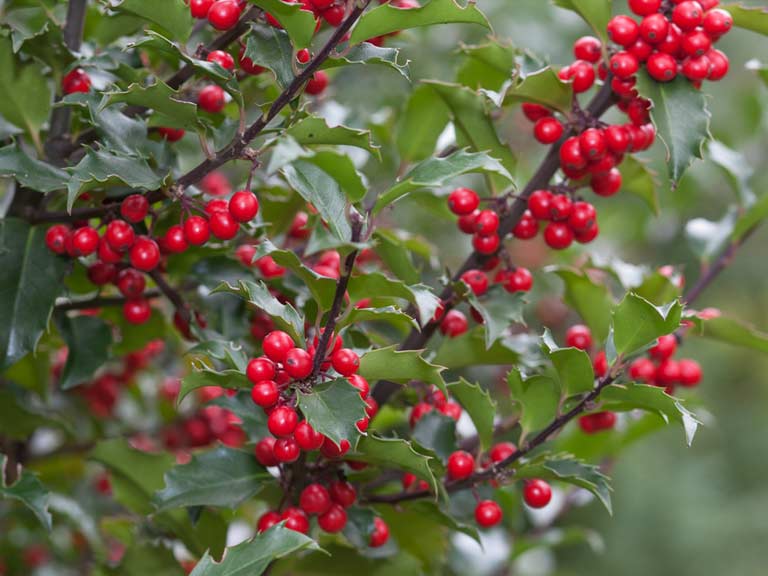
The holly tree is an evergreen plant meaning it grows all year round and provide a food source for birds in particular and can ensure populations survive winter. With over 400 species of the holly plant, it attracts a wide range of wildlife from thrushes and blackbirds to butterflies and moths. Due to its evergreen nature it is used for nesting and can be used by small mammals during the hibernation season.
Image result for holly plant
Photo from https://www.saga.co.uk/magazine/home-garden/gardening/plants/trees/how-to-grow-holly-and-get-berries

Hawthorn - 
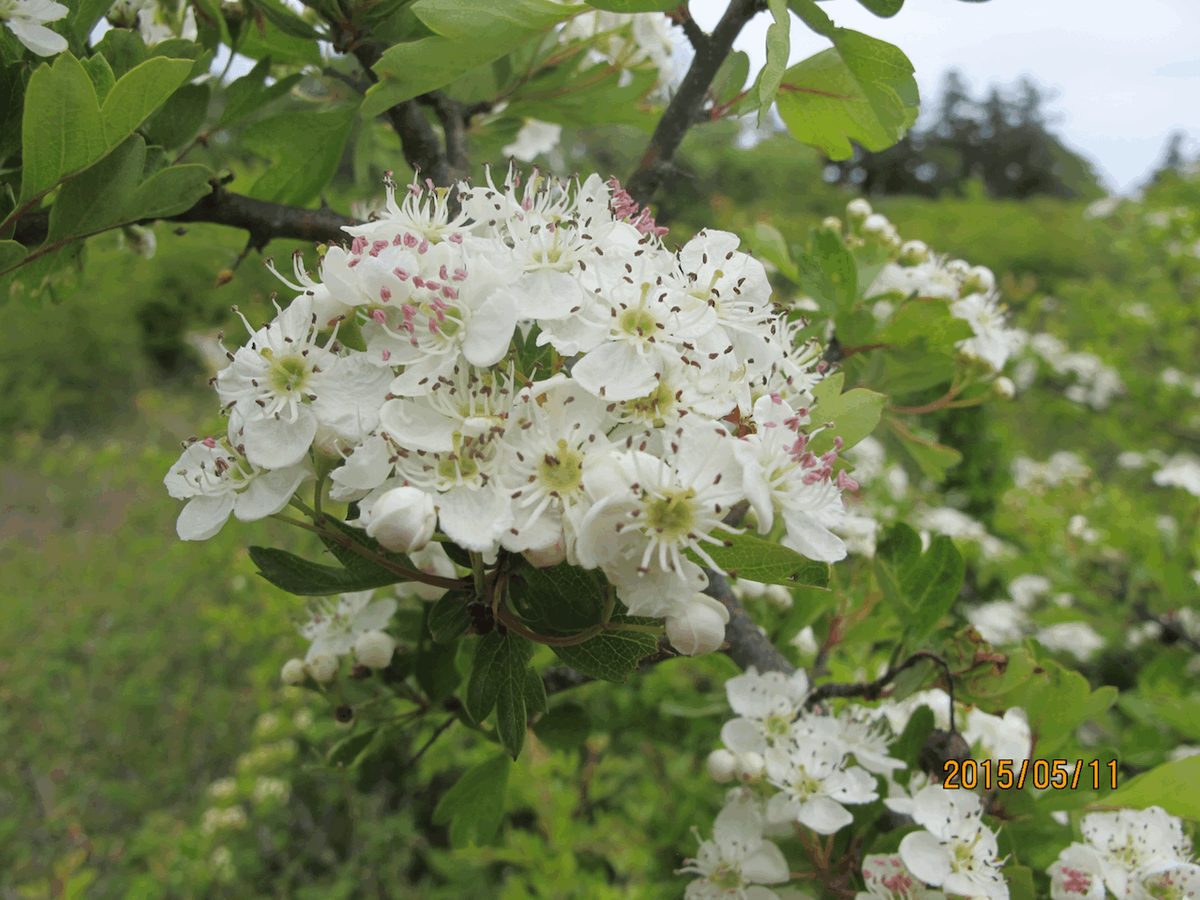
Hawthorns are one of the most common shrubs in the UK and attract around 150 species of insects and can provide a habitat for birds such as Goldfinches and Thrushes as it produces berries during the autumn. When the flowers bloom during the summer months, bumble bees love this plant and it also provides a habitat for ladybirds and earwigs. It is also a great food plant for caterpillar and can boost butterfly populations in your garden.
Image result for hawthorne plant
Photo from https://www.nwcb.wa.gov/weeds/english-hawthorn

Honeysuckle - 

Honeysuckle is so important to a wide range of species, particularly pollinators due to the incredibly sweet nectar it produces. . It also is important to the rare white admiral butterfly as the caterpillars will only feed on this plant. It also provides food and shelter for small mammals, in particular dormice.
Image result for honeysuckle
Photo from https://www.gardenia.net/plant/Lonicera-fragrantissima-Sweetest-Honeysuckle

Thyme - 
Experts encourage gardeners to include a wild range of plants including herbs. Thyme is a great one to grow as it provides nectar for bees and other pollinators but the ground cover it provides creates a safe habitat for other small invertebrates including detritivores that can improve the soil quality and organic matter content.
Image result for thyme
Photo from http://www.johnnyseeds.com/herbs/thyme/orange-thyme-seed-2934.html


Obviously, I'm not saying that if you don't plant these you don;t care about the environment because there are a range of factors to take into account such as the type of property you own, allergies and any pets you may have. If you have a large garden be sure to include a range of plants from trees, shrubs, flowers and herbs. Also don't forget to include grass as some butterflies have been known to lay eggs in the tall blades. In my opinion, we all need to be doing our bit to improve insect populations as they are vital for our way of life so even just planting a few flower pots along a balcony of a flat is a great start and should be encouraged.