Showing posts with label bees. Show all posts

Wednesday, 25 September 2019

Is the honey industry killing the bees?

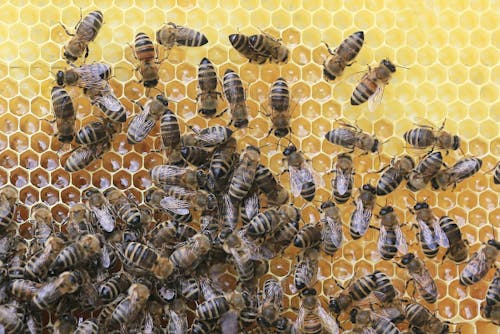
Bees on Honeycomb
Photo from pexels.com
We are all aware of the importance of maintaining a healthy pollinator population. We would lose over a third of our crops without them. Bees and other pollinators do this by transferring pollen between flowers allowing new seeds to be produced and dispersed, increasing crop and wild plant populations. Between 1996 and 2016, the European honey bee population declined by 25% as a result of colony collapse disorder (CCD) which has been attributed to a range of causes, including the removal of wild meadows, pesticides and parasites. Many of us believe that by buying honey we are supporting the growth of this declining population but is this really the case?

The average honey bee colony contains 50,000 bees, with the majority being worker bees whose role is to collect nectar for the hive. One hive can produce 14 KG of honey. That seems like an awful lot for one hive so is it really an issue for us to have some honey? To make 0.45 KG of honey the hive will have to get to two million flowers and travel around 55,000 miles to do this only for us to steal the majority of their food collected which, in my opinion, doesn't seem very fair to the the poor hard working bees. With CCD increasing in concern, we should be giving the bees the best chance for survival and that means ensuring that they have enough food to survive and reproduce.

To increase honey production, some beekeepers, mainly in the US, have resorted to artificial insemination to increase the number of drones in the hive, thus increasing the pollen collected. Although very few beekeepers are doing this is does mean killing at least one drone in order to collect the semen. The head and first segment of the body are crushed in order for the muscles to contract, making it easy to collect the semen. The queen bee is then held down via hooks in order to be inseminated which can lead to injury and possibly death of the queen. There have also been some cases where the queens wings have been clipped to prevent any chance of her flying away. With bee population becoming so scarce, should we be killing bees in order to artificially increase honey production for human consumption?

Despite these issues there are many other reasons for a declining bee population that don't involve honey. There is an argument that bee farms increase populations by increasing the amount of hives, planting flowers and reducing pesticides to increase bee populations. Bees in honey hives will also pollinate the surrounding area, helping to increase plant biodiversity which is the base of every food web, in turn supporting larger mammals in the area. It has also never been proven that there is a link between honey production and declining bee populations and there are many things we can do to limit the impact honey production has on bees. One thing could be to ban artificial insemination and limit the amount that can be taken form a single hive. So this begs the question, should governments be doing more to reduce our impact rather than stop eating honey altogether?

Personally, I think that ethically it isn't right for us to take the honey from the bees especially seeing as the entire hive is built around it. There are so many other alternatives, such as maple syrup, agave and date syrup, all derived from plants essentially cutting out the middle man. With bees being so important and becoming so scarce, shouldn't we be doing everything in our power to protect them?


Resources -
https://phys.org/news/2016-01-complex-worldwide-bee-declines.html
http://www.bbc.co.uk/guides/zg4dwmn
https://friendsoftheearth.uk/bees/honey-ethical-guide
https://www.peta.org/issues/animals-used-for-food/animals-used-food-factsheets/honey-factory-farmed-bees/

Sunday, 8 July 2018

The Five Plants You NEED To Grow

With urbanisation continuing to rise and open green areas in rapid decline, how we use our gardens is becoming increasingly important for the wildlife and the environment. Around 1,000 of our agricultural plants rely on pollinators to grow to increasing the habitat available for birds, bees and bats is important for our food system and larger populations leads to a higher food production. They are also the basis of the ecosystem and the food chains as they contribute to the growth of wild fruits and green plants that feed the primary consumers such as rabbits and wild mice. They can also protect habitats of large economic and cultural significance. Experts say that the majority of plants should be native to this country (around 70%) to replicate the natural habitat of British wildlife. Another thing to remember is to allow plants and organic matter to decay to attract other invertebrates ( such as woodlice) and larger mammals like hedge hogs that are also becoming more vulnerable.  So, here are the top five plants to include in your garden to help see these populations rise.

Lavender - 
Not only will these add a beautiful colour to your garden and smell amazing, but pollinators love them. They provide a large amount of nectar and pollen which can increase bee and butterfly populations in particular. Ladybirds also love them which eat pests such as aphids and the smell also repels other pests and can act as a natural form of pest control which could also benefit any vegetable patches you may choose to grow.
Image result for lavender plant
Photo from https://www.theflowerexpert.com/content/giftflowers/flowersandfragrances/lavenders

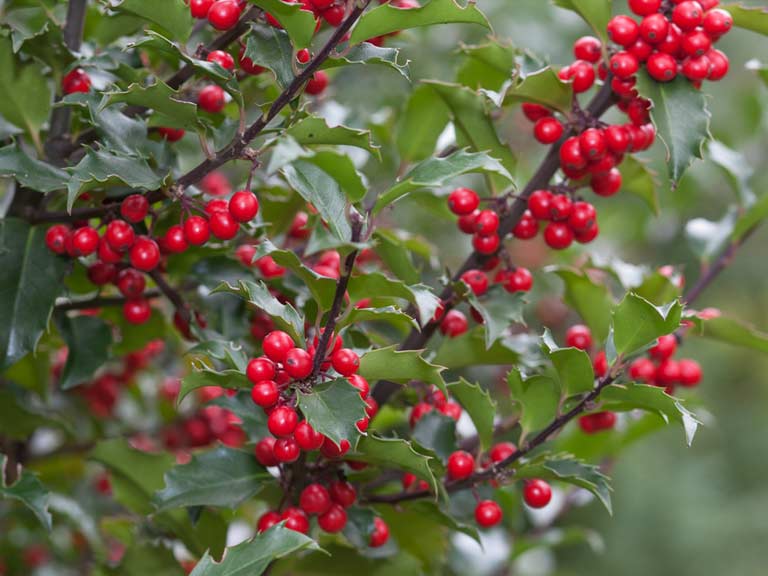
Holly - 
The holly tree is an evergreen plant meaning it grows all year round and provide a food source for birds in particular and can ensure populations survive winter. With over 400 species of the holly plant, it attracts a wide range of wildlife from thrushes and blackbirds to butterflies and moths. Due to its evergreen nature it is used for nesting and can be used by small mammals during the hibernation season.
Image result for holly plant
Photo from https://www.saga.co.uk/magazine/home-garden/gardening/plants/trees/how-to-grow-holly-and-get-berries

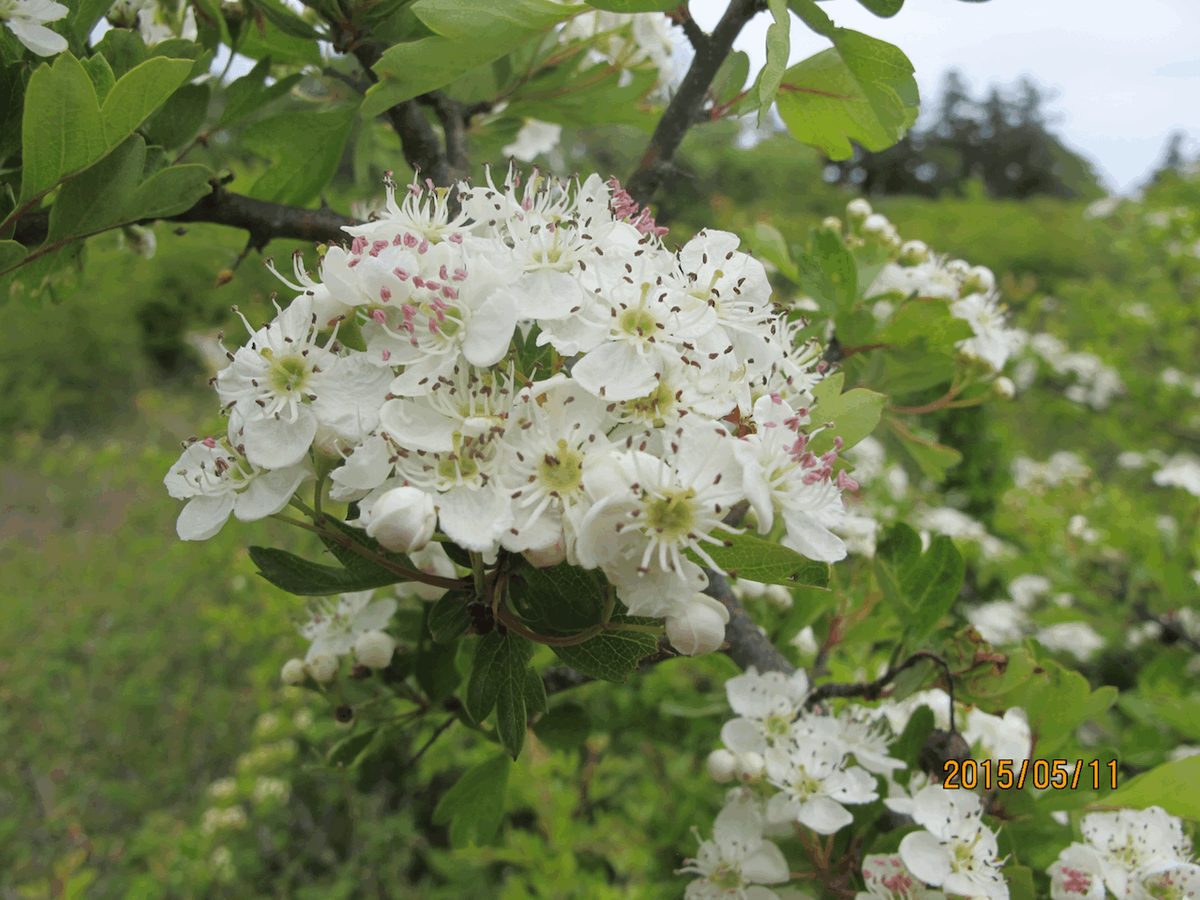
Hawthorn - 
Hawthorns are one of the most common shrubs in the UK and attract around 150 species of insects and can provide a habitat for birds such as Goldfinches and Thrushes as it produces berries during the autumn. When the flowers bloom during the summer months, bumble bees love this plant and it also provides a habitat for ladybirds and earwigs. It is also a great food plant for caterpillar and can boost butterfly populations in your garden.
Image result for hawthorne plant
Photo from https://www.nwcb.wa.gov/weeds/english-hawthorn

Honeysuckle - 

Honeysuckle is so important to a wide range of species, particularly pollinators due to the incredibly sweet nectar it produces. . It also is important to the rare white admiral butterfly as the caterpillars will only feed on this plant. It also provides food and shelter for small mammals, in particular dormice.
Image result for honeysuckle
Photo from https://www.gardenia.net/plant/Lonicera-fragrantissima-Sweetest-Honeysuckle

Thyme - 
Experts encourage gardeners to include a wild range of plants including herbs. Thyme is a great one to grow as it provides nectar for bees and other pollinators but the ground cover it provides creates a safe habitat for other small invertebrates including detritivores that can improve the soil quality and organic matter content.
Image result for thyme
Photo from http://www.johnnyseeds.com/herbs/thyme/orange-thyme-seed-2934.html


Obviously, I'm not saying that if you don't plant these you don;t care about the environment because there are a range of factors to take into account such as the type of property you own, allergies and any pets you may have. If you have a large garden be sure to include a range of plants from trees, shrubs, flowers and herbs. Also don't forget to include grass as some butterflies have been known to lay eggs in the tall blades. In my opinion, we all need to be doing our bit to improve insect populations as they are vital for our way of life so even just planting a few flower pots along a balcony of a flat is a great start and should be encouraged.