<a href="https://www.bloglovin.com/blog/19513415/?claim=k49c68jz6j4">Follow my blog with Bloglovin</a>
Follow me on Bloglovin for updates here -
https://www.bloglovin.com/blogs/protecting-wild-19513415
Saturday, 30 June 2018

Are Electric Cars the Answer?
 |
| Photograph from Financial Tribute, October 2017 - https://financialtribune.com/articles/auto/74460/china-electric-car-output-to-hit-1m-next-year |
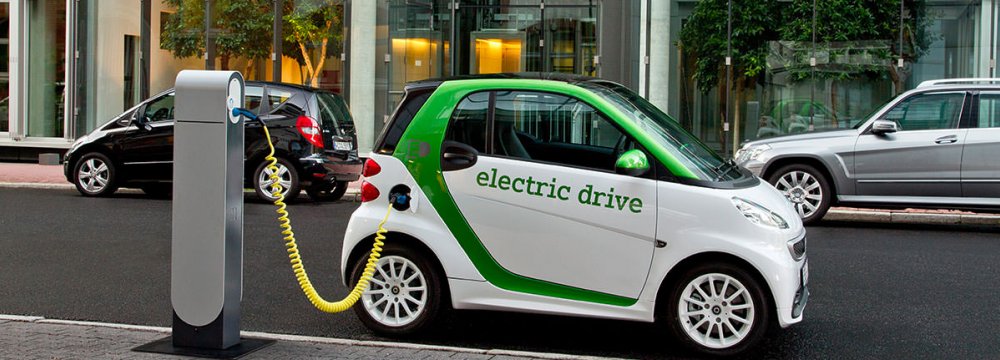
Firstly lets look at the total greenhouse gas emissions. Per km, the average petrol run car produces the equivalent of 125g of CO2 whereas the average hybrid produces 82g per km. If your car were to be a pure electric car, the emissions would be even lower averaging at 57g per km. This is mainly due to the fact that no combustion occurs in the engine of an electric car but this doesn't mean they're completely green. Firstly, the average electric car produces 3.3 tonnes more CO2 during the production in comparison to the average for petrol cars. There are also the greenhouse gases produced during electricity generation as during 2015 roughly 66% of electricity was generated using fossil fuels, the so called 'green' cars are still contributing towards the enhanced greenhouse effect. However, there is evidence to suggest that electric cars have the potential to produce 80% less greenhouse gas emissions compared to a petrol car. Personally, I believe this to be possible as it has been proven that electric cars are more energy efficient, but the amount of emissions will vary depending on the nations energy mix as well as the future development of the car batteries. Overall, there are fewer emissions produced by electric cars and they do not produce any exhaust emission resulting in fewer NOx and PM emissions which will help improve air quality, particually in urban areas. Taking all these into account, statistically electric cars are better for the environment in terms of emissions and can be shown to improve air quality.
Despite this fact, fossil fuels still account for the majority of electricity generation with 51% of the UK's energy in 2016 being generated by natural gas and coal. This means that greenhouse gases will still be being produced and with the current geopolitical issues surrounding natural gas, the growth in electric cars could put a strain on our current reserves which can be described as touchy at best, particularly in Ukraine. Although less oil is used for electricity generation, electric cars could lead to a growth in the coal industry and open cast mining in particular has a huge environmental impact. There is large habitat damage which reduces biodiversity and puts a strain on vulnerable species due to the removal of vegetation that is considered 'overburden'. There is also the issue of sulphur dioxide emission, increasing acid rain and the release of toxic trace element polluting the water supply. The increase in demand for electricity has the potential to increase the amount of nuclear power stations as nuclear fission has an extremely high energy density, much higher than that of any current technology. There are many growing concerns as even though there are no greenhouse gas emission and it is recyclable, there is the issue of nuclear waste production and radiation which threaten the health of workers as well as the surrounding area if radioactive dust particles are released into the atmosphere. The unstable nature of radioisotopes means that there is a risk of a nuclear reactor explosion which could mean that occurrences similar to Fukishima and Chernobyl could become more common if the demand for nuclear energy would to increase.
The other main benefits is the economic savings. Most electric cars are tax free which means a saving of between £140 and £2070 annually, depending on how polluting your car is. There is also the reduced maintenance cost as no greenhouse gases and polluting exhaust gases mean there is no need for oil changes and the engine is kept cleaner for longer. There is also the Plug-in Car Grant meaning there is an additional saving with a reduced buying price but it is more than likely this grant will not last long if electric car sales begin to rise.
The biggest con however, is the lack of infrastructure available. With charging points still being relatively uncommon, many people would not feel comfortable using a pure electric car for a long journey. The batteries also have a long charging time meaning that already long journey could take twice as long and drivers will be forced to use the limited charging stations available which could could cost a pretty penny. Without the infrastructure available, it is unlikely many users will see the benefits that are being advertised as many see this as there being an increase risk in breakdown and just as inconvenience especially for those who commute regularly. With a lack of infrastructure personally I cannot see the demand for pure electric cars rising but I feel that hybrid cars are a solution to this problem as this removes the risk of running out of fuel and eliminates that risk of there being no charging stations on route.
Overall, I feel that there are better and more reliable alternatives to pure electric cars that are greener. Personally I feel that with a development in the hydrogen engine (even though it is expensive and not available yet) the future of cars will be more sustainable. This would also combat the major environmental issue of the nickel needed for car batteries and have an even lower ecological footprint.
Resources -
- Energy Sage, Pros and cons of electric cars, September 2018, https://www.energysage.com/electric-vehicles/101/pros-and-cons-electric-cars/
- Sean Clarke, The Gaurdian, How green are electric cars?, December 2017, https://www.theguardian.com/football/ng-interactive/2017/dec/25/how-green-are-electric-cars
- Carbon Footprint Ltd, Electric Vehicles, 2017, https://www.carbonfootprint.com/electric_vehicles.html
- Energy UK, Electricity Generation, 2018, https://www.energy-uk.org.uk/energy-industry/electricity-generation.html
- Murray Sculluion, Electric cars: pros and cons, Buyacar.co.uk, May 2018, https://www.buyacar.co.uk/cars/economical-cars/electric-cars/651/electric-cars-pros-and-cons
Monday, 4 June 2018
Can Cotton Be Sustainable?
 |
| Image from www.heraldsun.com.au |
I was in Primark the other day (not the most eco-friendly I'll admit) and I noticed that they had a sustainable cotton section. Cotton farming requires a huge amount of land that is often derived from unsustainable deforestation methods (i.e. slash and burn) and the growing and harvesting process has a huge environmental impact so I was happy to see a big retailer trying to reduce the environmental impact. However this did get me thinking what made this cotton sustainable? Can cotton farming ever be sustainable?
Firstly why is cotton farming so unsustainable?
Cotton farming has huge ethical and environmental implications the first of which being the huge water consumption with the average water footprint being 10,000 litres per kilogram. With 730 million without access to clean water globally, cotton farming increases water scarcity in the areas with the greatest need for water. Cotton is also considered the 'dirtiest crop' by many organisations, such as the EJF, with cotton farming using 16% of all insecticides. Over 98% of all insecticides kill no target species causing a decline in the main pollinator species. There is also a risk of contamination of aquatic environments from runoff causing a decline in aquatic organisms. There are also health implications for workers and with 99% of all cotton farmers living in third world countries, there is a lack of safety and hazard testing. For example, a common pesticide used for cotton farming is easily absorbed via the skin and has the potential to kill. Other health implications of insecticides include respiratory illnesses, memory loss and seizures. There is also a huge amount of pollution produced as a result of deforestation and the chemicals used in the dyeing and bleaching process causes a large amount of environmental degradation. These chemicals include heavy metals and benzidine/chlorine bleaches which have been linked to an increased risk of cancer.
There is also a huge socioeconomic impact with the workers in third world nations receiving low wages and the rich TNC's receiving the majority of profits, driving the poverty cycle. The majority of workers receive wages lower than the amount needed to meet their basic human needs. Many of these workers work long working days (with hours above the limit set by the International Labour Organisation) and overtime often goes unpaid. There is also a huge number of children working in the fields and Uzbekistan has been outed for shutting schools and forcing children to work in cotton fields.
This begs the question what is the difference between 'normal' cotton and sustainable cotton, like the one used in Primark?
Sustainable cotton is defines as the sources being 'either organic, better or recycled' which has the potential to vastly reduce the environmental footprint of cotton farming. With the greatest amount of energy being used, resulting in a large amount of pollution, is during the extraction and processing of cotton so recycled cotton will greatly reduce the ecological footprint. Cotton that is certified GRS (Global Recycle Standard) ensures that cotton has been produced with minimal environmental and chemical impacts throughout the entire production process. This ensures the cotton farm has a chemical management system in place to meet all the legal requirements and to reduce the amount of pollution and run off. It also ensures that all companies meet the set target for energy use (as set by Textile Exchange) and there are frequent reviews to help improve energy efficiency. there are also set targets for water use and air pollution levels helping to reduce the environmental impact further.
Organic is defined as "produced or involving production without the use of chemical fertilisers, pesticides, or other artificial chemicals" in the Oxford dictionary. Although natural pesticides and fertilisers can still be harmful, there is less contribution to acidification and eutrophaction, reducing the impact on aquatic life and the soil in the surrounding area helping both the local people and the biodiversity. The chemicals used to treat regular cotton can bio-accumulate within the food chain meaning the impacts can be seen in the top predators even though they are not in direct contact with the chemical as it is stored in the fatty tissue of smaller, prey organisms. Pesticides have been linked to 67 million annual deaths in birds in the U.S. alone due to the bio-accumulating properties. With less pesticide use, there is a greater chance of bio-diversity recovering in cotton farming areas.
 |
| Photo of certified organic cotton labels from babycribbed.com |
There are also major differences to the workers, with organisations working to improve working conditions. The Better Cotton Initiative ensure that farmers receive more of the profits, better working conditions and healthcare and has been based on UN labour standards. This mean there is a better quality of life for the workers as there is less fear of discrimination and better workers rights so they are not afraid of becoming unemployed if they do not receive a pay cut. The increase in disposable income means there is a greater chance of improving sanitation, education and access to clean water and food. The knock on effects mean that workers under these initiatives have a chance at a better quality of life.
There are a large number of cotton standards and projects to help improve the sustainability but with less than 1% of the worlds cotton being certified organic, there is still a huge amount of demand and need for unsustainable farming methods to meet the huge demand. With 120.8 million bales (at 480 pounds each) being produced in 2017, more retailers need to enforce these farming methods to ensure the minimal environmental impact and ensure we have cotton as a resource for the future. However, in my opinion cotton is one of the most unsustainable materials and there are better options for retailers to invest in with a much smaller impact. For example, not only is hemp a more durable material, which will help reduce the production demand, but also requires half the amount of land that cotton does and requires less water at 2,000 L per kg. There are also more sustainable materials such as linen and soy silk showing there are materials out there that can improve the sustainability of the fashion industry. A life cycle assessment carried out but the Textile Exchange staes that organic farmed cotton was "significantly more environmental friendly" but organic cotton also requires more land than convential cotton as it has a much lower yield so some believe that it may lead to an increase in deforestation, questioning the sustainability of organic cotton. There are also more sustainable materials such as linen and soy silk showing there are materials out there that can improve the sustainability of the fashion industry.
Overall, my personal view is that recycled cotton is a better option than organic and conventional cotton due to the reduced chemical and land use. Despite this I do feel that there are better options available and companies should be investing in these materials. I do feel that some responsibility should lie with the consumer as there are alternatives such as buying second hand clothing and choosing your clothing brands more carefully.
References -
- Risks of cotton processing, Organic Cotton, (2016), https://www.organiccotton.org/oc/Cotton-general/Impact-of-cotton/Risk-of-cotton-processing.php
- Ethical Issues in Cotton Production, Ethical Consumer Research Association Ltd, (August 2017), http://www.ethicalconsumer.org/ethicalreports/fashionindustry/cotton.aspx
- Global Cotton Production, Statista, (2018), https://www.statista.com/statistics/259392/cotton-production-worldwide-since-1990/
- What Is the Most Animal and Eco-Friendly Material for Clothing?, Lindsay Patton, (January 26 2015), http://www.onegreenplanet.org/environment/what-is-the-most-animal-and-eco-friendly-material-for-clothing/
- Global Recycled Standard, Textile Exchange, (2017), http://textileexchange.org/wp-content/uploads/2017/06/Global-Recycled-Standard-v4.0.pdf
- 13 brands sign sustainable cotton pledge - but is organic cotton really better?, Vlvlan Herdrlksz, Fashion United, (7 June 2017), https://fashionunited.uk/news/fashion/13-brands-sign-sustainable-cotton-pledge-but-is-organic-cotton-really-better/2017060724755
Saturday, 5 May 2018
One Week's Worth of Plastic

So recently I've become interested in the zero waste movement and trying to cut down my plastic use. I feel that I do not produce a large amount of waste (seeing as I'm a single person household) and thought it would be interesting to test this and see how much single use plastic I throw away. I feel that this photo doesn't show how large this like actually was which also disappointed me because I truly believed I was making a conscious effort to reduce my plastic but evidently I was wrong. This got me thinking if zero waste is possible considering supermarkets cover everything in a toxic layer of plastic. Thankful I have alternatives, such as the market but for others it may not be affordable or accessible. Seeing as plastic is such a current issue why is it so hard to cut our use of them and who is really responsible for such high plastic consumption?
Obviously, the consumer holds the majority of responsibility because they chose what products they purchase and have the power to chose products with less plastics. However, I do understand the some families will be driven by cost and they may not have the option to chose zero waste options if they are more expensive. I did notice that Aldi (in my opinion) had one of the greatest unnecessary use of plastic and Aldi is known for being one of the more reasonably priced supermarkets. So this made me think if retails are ultimately responsible seeing as the majority of plastic is honestly just unnecessary. Do bananas really need to come wrapped in a single use plastic bag? This goes back to my belief that retailers should be held accountable for the unsustainable use of our finite resources.
Here are a few of the simple steps I have taken to reduce my plastic use:
- Bringing my own reusable cup
- Reusable shopping bags
-Buying plastic alternatives
- Bio degradable bin liners
- Buying loose fruit and veg
- Packing my own lunch in a reusable container
Sunday, 22 April 2018
The Cost of Biofuels
With growing greenhouse gas emission being linked to oil consumption, it's no surprise that we as a population are keen to find a more sustainable alternative, the main opinion being that bio-fuel is most likely the best option. With global bio-fuel production growing 137 billion L in 2016, with this figure projected to rise, we really need to ask the question of this is the most sustainable alternative.

So what are bio-fuels?
Bio-fuels are fuels created from organic matter (i.e. biomass and bio-waste) as an alternative to crude oil products with the most common forms being bio-diesel and ethanol. With bio fuels being widely used in developing countries it makes up 10% of global energy consumption and Brazil tops global production with 19.2 million L being produced in 2007. So fuel made from plants, sounds sustainable right? In my opinion this couldn't be further from the truth.
The first issue that should be raised is land use. In the US, annual oil usage is 134 billion gallons and in order to meet this demand 168 million acres of sugarcane would be needed. To me, this seems near impossible to achieve and the complete opposite of sustainable, especially when you factor in the rate the population is growing. With a growing population (that we are currently struggling to feed), shouldn't the land be used to grow food? The lack of agricultural land will result in an increase in food imports, increasing the food miles per person. Won't this just increase fossil fuel use from aircraft and container ships?
Say hypothetically we manage to overcome the fuel over food issue, the loss of biodiversity will be huge. Mass deforestation will have to occur to meet demand, putting already threatened species at risk. With Brazil being the leader in bio-fuel production, would this put even more pressure on the
already shrinking Amazon rain forest considering soy is used for bio-diesel? The Cerrado region has 8-9 million hectares of sugarcane plantation (used for ethanol fuel) which is a main cause for the ecosystem declining by 60%. With WWF claiming up to 10,000 species a year are going extinct, a growing bio-fuel industry would only increase this number as there would be a greater demand for this? Combine this with the growing demand for food and this figure rises even higher. Although I feel ethically we should conserve these areas, humans also benefit from biodiversity both economically and in terms of well-being. We gain food, water, fertile soil and some medicines from natural ecosystems, most of which are highest in ecosystems with the richest biodiversity. These can be sold and exported (e.g. tropical fruit, coffee) increasing income and security for individuals. Biodiversity also has cultural significance and have been linked to better mental health and social relations. Seeing as we gain so much from the natural ecosystems already present, should we not be looking at other alternatives for fuel?
The main benefit to bio-fuels is they are green and cut carbon emission right? Wrong. Yes, I am aware the plants used will act as a carbon sink so it could be argued that the bio-fuels themselves do not produce any additional greenhouse gases. However we need to take into consideration the secondary greenhouse gases produced as a by product of production. The majority of deforestation occurs as a result of 'slash and burn' methods will release a huge quantity of carbon dioxide, carbon monoxide, nitrous oxide and methane (which is more polluting that CO2). There will also be an increase in demand for fertilisers, increasing NO2 levels and ,considering NO2 has a global warming potential around 300 times greater than CO2, this will only amplify the enhanced greenhouse effect. There is also the added cost of fuel from machinery for planting and harvesting as well as the emissions from the production/conversion process which will have to be done on an industrial scale. With all of these considered, it really does question how green bio-fuels really are.

My opinion is that there are other renewable energy sources available that could be developed that are more sustainable. Although I am all for phasing out petrol and diesel, I don't feel that the way to doe this is with biofuels.
Resources -
So what are bio-fuels?
Bio-fuels are fuels created from organic matter (i.e. biomass and bio-waste) as an alternative to crude oil products with the most common forms being bio-diesel and ethanol. With bio fuels being widely used in developing countries it makes up 10% of global energy consumption and Brazil tops global production with 19.2 million L being produced in 2007. So fuel made from plants, sounds sustainable right? In my opinion this couldn't be further from the truth.
The first issue that should be raised is land use. In the US, annual oil usage is 134 billion gallons and in order to meet this demand 168 million acres of sugarcane would be needed. To me, this seems near impossible to achieve and the complete opposite of sustainable, especially when you factor in the rate the population is growing. With a growing population (that we are currently struggling to feed), shouldn't the land be used to grow food? The lack of agricultural land will result in an increase in food imports, increasing the food miles per person. Won't this just increase fossil fuel use from aircraft and container ships?
Say hypothetically we manage to overcome the fuel over food issue, the loss of biodiversity will be huge. Mass deforestation will have to occur to meet demand, putting already threatened species at risk. With Brazil being the leader in bio-fuel production, would this put even more pressure on the
already shrinking Amazon rain forest considering soy is used for bio-diesel? The Cerrado region has 8-9 million hectares of sugarcane plantation (used for ethanol fuel) which is a main cause for the ecosystem declining by 60%. With WWF claiming up to 10,000 species a year are going extinct, a growing bio-fuel industry would only increase this number as there would be a greater demand for this? Combine this with the growing demand for food and this figure rises even higher. Although I feel ethically we should conserve these areas, humans also benefit from biodiversity both economically and in terms of well-being. We gain food, water, fertile soil and some medicines from natural ecosystems, most of which are highest in ecosystems with the richest biodiversity. These can be sold and exported (e.g. tropical fruit, coffee) increasing income and security for individuals. Biodiversity also has cultural significance and have been linked to better mental health and social relations. Seeing as we gain so much from the natural ecosystems already present, should we not be looking at other alternatives for fuel?
The main benefit to bio-fuels is they are green and cut carbon emission right? Wrong. Yes, I am aware the plants used will act as a carbon sink so it could be argued that the bio-fuels themselves do not produce any additional greenhouse gases. However we need to take into consideration the secondary greenhouse gases produced as a by product of production. The majority of deforestation occurs as a result of 'slash and burn' methods will release a huge quantity of carbon dioxide, carbon monoxide, nitrous oxide and methane (which is more polluting that CO2). There will also be an increase in demand for fertilisers, increasing NO2 levels and ,considering NO2 has a global warming potential around 300 times greater than CO2, this will only amplify the enhanced greenhouse effect. There is also the added cost of fuel from machinery for planting and harvesting as well as the emissions from the production/conversion process which will have to be done on an industrial scale. With all of these considered, it really does question how green bio-fuels really are.
My opinion is that there are other renewable energy sources available that could be developed that are more sustainable. Although I am all for phasing out petrol and diesel, I don't feel that the way to doe this is with biofuels.
Resources -
- International Energy Association, Tracking Progress: Transport biofuels, https://www.iea.org/etp/tracking2017/transportbiofuels/
- FAO, Agricultural Outlook 2016, http://www.fao.org/3/a-BO103e.pdf
- WWF, biodiversity, http://wwf.panda.org/about_our_earth/biodiversity/biodiversity/
- BioGrace, Greenhouse gas emissions from biofuels, EU, http://biograce.net/content/biofuelrelatedpolicies/ghgemissionsfrombiofuels
- European Federation for Transport and Environment, Bio-diesels Impact, https://www.transportenvironment.org/press/biodiesel%E2%80%99s-impact-emissions-extra-12m-cars-our-roads-latest-figures-show
Friday, 13 April 2018
Should We Tax Plastic?
Recently the UK government has introduced a new 'Sugar Tax' which means that high sugar drinks have become a higher taxed item. The main goal is to entourage companies to reduce the sugar content of drinks to lower the price as part of a healthy living initiative. This got me think if a similar approach should be applied to single use plastics, specifically packaging. If you visit a supermarket everything is covered in single use plastic that just isn't necessary. I remember getting new toys a child and how difficult it was to remove the unnecessary plastic. My poor parents on Christmas must have cut themselves numerous times.Walking around the supermarket makes me think what actually needs it and the items with less plastic or are biodegradable are often more expensive. Shouldn't it be the other way around? With supermarkets creating over 800,000 tonnes of plastic a year I feel the government should be doing more to reduce waste production.
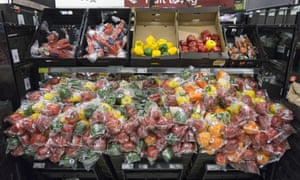 Image from The Gaurdian
Although the general public should be encouraged to reduce waste, companies should be targeted more in my opinion. My idea is that once a product has passed a certain amount of plastic (so over what is deemed necessary) they should be taxed to cover disposal and the environmental cost. This will make single use plastic items more expensive to consumers which in turn will also encourage consumers to seek alternatives for plastic. This could also result in large TNC's to invest in alternatives that are biodegradable and potentially tackle the ever growing micro plastic problem as there will be less plastic breaking down in our oceans. Did you know that 80% of plastic debris in the oceans come from land? The breakdown of these items create micro plastic fragments which are easily ingested by fish, particularly those lower in the food chain. This also causes chemicals to be released into the natural environment, such as BPA, many of which are toxic to living organisms.
Not only will a plastic tax make fish populations healthier, but it will reduce the amount of plastic we, as the human population, ingest. We ingest a range of plastics that enter our bodies through contaminated food and water. One plastic we ingest is Polyvinylchloride (#3PVC), a key chemical in plastic food packaging, that has actually been linked to an increased rate of cancer and birth defects. With over a third of all seafood caught in the UK containing plastic, those with a high fish diet have the highest rate of ingestion. One study has shown that those with a high shellfish diet consume up to 11,000 plastic fragments.
We can't also forget that less plastic used for useless, and quite frankly stupid, packaging will reduce our oil consumption which is especially important as we are in danger of reaching 'peak oil'. With 8% of global oil use being manufacturing plastics, it would encourage better management and distribution of our shrinking petroleum reserves as well as reducing global greenhouse gas emissions.
Overall, I feel the TNC's should be held more responsible for their unsustainble use of plastics to reduce the amount of toxic plastic that we throw away and the only way to do this is with a financial incentive because we all know that is the only way to ensure this. I feel a plastic tax will make the plastic alternatives cheaper and therefore more widely used.
Further Reading
Image from The GaurdianAlthough the general public should be encouraged to reduce waste, companies should be targeted more in my opinion. My idea is that once a product has passed a certain amount of plastic (so over what is deemed necessary) they should be taxed to cover disposal and the environmental cost. This will make single use plastic items more expensive to consumers which in turn will also encourage consumers to seek alternatives for plastic. This could also result in large TNC's to invest in alternatives that are biodegradable and potentially tackle the ever growing micro plastic problem as there will be less plastic breaking down in our oceans. Did you know that 80% of plastic debris in the oceans come from land? The breakdown of these items create micro plastic fragments which are easily ingested by fish, particularly those lower in the food chain. This also causes chemicals to be released into the natural environment, such as BPA, many of which are toxic to living organisms.
Not only will a plastic tax make fish populations healthier, but it will reduce the amount of plastic we, as the human population, ingest. We ingest a range of plastics that enter our bodies through contaminated food and water. One plastic we ingest is Polyvinylchloride (#3PVC), a key chemical in plastic food packaging, that has actually been linked to an increased rate of cancer and birth defects. With over a third of all seafood caught in the UK containing plastic, those with a high fish diet have the highest rate of ingestion. One study has shown that those with a high shellfish diet consume up to 11,000 plastic fragments.
We can't also forget that less plastic used for useless, and quite frankly stupid, packaging will reduce our oil consumption which is especially important as we are in danger of reaching 'peak oil'. With 8% of global oil use being manufacturing plastics, it would encourage better management and distribution of our shrinking petroleum reserves as well as reducing global greenhouse gas emissions.
Overall, I feel the TNC's should be held more responsible for their unsustainble use of plastics to reduce the amount of toxic plastic that we throw away and the only way to do this is with a financial incentive because we all know that is the only way to ensure this. I feel a plastic tax will make the plastic alternatives cheaper and therefore more widely used.
Further Reading
- ICIS, Plastics and their impact on human health, http://iciscenter.org/plastics-and-their-impacts-on-human-health/
- Teach the Earth, Plastics in the Ocean Affecting Human Health, https://serc.carleton.edu/NAGTWorkshops/health/case_studies/plastics.html
- The Gaurdian, From sea to plate: how plastic got into our fish, https://www.theguardian.com/lifeandstyle/2017/feb/14/sea-to-plate-plastic-got-into-fish
Sunday, 1 April 2018
Is A No-Growth Economy The Answer?
When I first discovered my passion for nature, I never thought I would have to study economics . In fact I thought these two subjects could never coexist. In fact it's actually quite surprising that the majority of economic growth comes from the ecosystem. Our economy is built on manufacturing and consumers paying for the manufactured goods. We build our economy on exports and the more the produce, the more we sell and the more we grow. The main question is what happens to these goods we we don't need them? The answer is they go back into the ecosystem as waste which can be through landfill or pollution.


Countries develop their economy by increasing production and thereby increasing consumption. However, in order to do this a large amount of extraction has to happen in order to get the necessary fuel and resources. And how do we get this? Deforestion, mining and basically any process that kills wildlife and causes our biodiversity to decline.
So this poses the question, can the economy and the ecosystem grow and develop together? Short answer is no. As one grows the other shrinks and with us prioritising the economy, the ecosystem is continuing to decline. The theory and idea of ecological economics doesn't suggest we revert to a preindustrial society with no technology, but states we should maintain our current economy to avoid and limit future extraction. This will help to preserve our natural resource and the earth for future generations. This will also limit the disposal of waste going back into the ecosystem. If we can also reuse and develop our waste it will also limit the extraction process. Ecological economics calls for a shift from conventional economics to stop economic growth because we simply cannot sustain it. We need to stop growing. I mean imagine if every single country reached the same level of development as the UK or America. It simply is not possible. We need better allocation and management of our natural resources to save our planet.
So to summer use, the economy and the ecosystem are connected and if the economy grows (as every government wants to), the ecosystem will decline. Instead of making the production system an open system, it needs to become closed with a focus on reusing and repurposing waste rather than disposal. Society also needs to shift away from a consumer based economy, in a sense. We need to stop buying what we want and what we need. We need to reduce all the unnecessary stuff we have that damages our environment.
Subscribe to:
Posts (Atom)